
Emergency Air Duct Cleaning Near Me: What Coral Springs Homeowners Should Do First
Here’s the first thing to know, and it surprises almost everyone: the correct first move in a suspected duct emergency usually isn’t calling a duct cleaner. It’s shutting the system down and figuring out what you’re actually dealing with. Running the AC to “clear the air” after spotting mold near a vent is one of the most common mistakes we hear about in Coral Springs, and it does the opposite of what people hope. It pushes spores through every room before anyone has located the source. So before you dial anyone, read the next few minutes of this guide. If you’d rather not sort through it alone, call (844) 761-5395 and we’ll help you triage it.
What Counts as a Real Duct Emergency in Coral Springs?
Only three situations genuinely warrant urgent attention, and they don’t all call for the same response. South Florida’s humidity is the thread running through all of them: moisture that never fully dries is what turns a small problem into a contamination event. Knowing which scenario you’re in tells you whether to act in the next hour or the next week.
- Post-flood contamination. If water reached supply or return ductwork, that’s the most serious case. Wet insulation and porous duct board can support mold growth quickly in Coral Springs’ climate. Shut the system off and treat this as a remediation job before any cleaning happens.
- Visible mold at supply registers. A speckled patch around a vent doesn’t automatically mean the whole system is contaminated, but it does mean stop circulating air until someone assesses the source. The mold may be at the register, in the boot, or deeper in the run.
- Vermin intrusion. Rodents or other animals in ductwork leave droppings and nesting material, and that’s a contamination concern, not just an odor problem. Avoid running the system and don’t disturb the debris yourself.
Notice what’s not on the list: a dusty vent cover, a musty smell you’ve lived with for months, or rising energy bills. Those matter, but they’re scheduled-maintenance territory, not emergencies. In Coral Springs, homeowners sometimes confuse the two and end up paying urgent prices for a job that could wait a week.
What Should You Do Before Any Company Arrives?
Your job before a technician gets there is to stop the spread and preserve evidence, not to clean anything. The actions below protect your household and your insurance claim at the same time. They’re also the reason a legitimate company will ask what you’ve already done when you call.
- Turn the system off at the thermostat. This is the single most important step in every scenario. No fan, no circulation, no spreading.
- Document everything before you touch it. Photograph the affected registers, any staining, the visible mold, or the pest evidence. Note the date and time. Insurance adjusters care about the timeline.
- Isolate affected zones. Close the registers in rooms with visible contamination and keep doors shut. If there’s a strong musty or animal odor, keep people and pets out of those rooms.
- Don’t spray bleach or “encapsulate” anything. DIY treatments on duct interiors can void an insurance claim and can make a remediation assessment harder.
- Don’t run a shop vac on the vents. Consumer vacuums lack the filtration to capture fine particulates, so they can blow contamination back into the room.
One practical note for Coral Springs: our humid climate means you want to dry any standing moisture quickly, but don’t aim a fan into an affected vent. Ventilate the room, not the ductwork.
Why “Emergency” Duct Cleaning Is Usually a Two-Phase Job
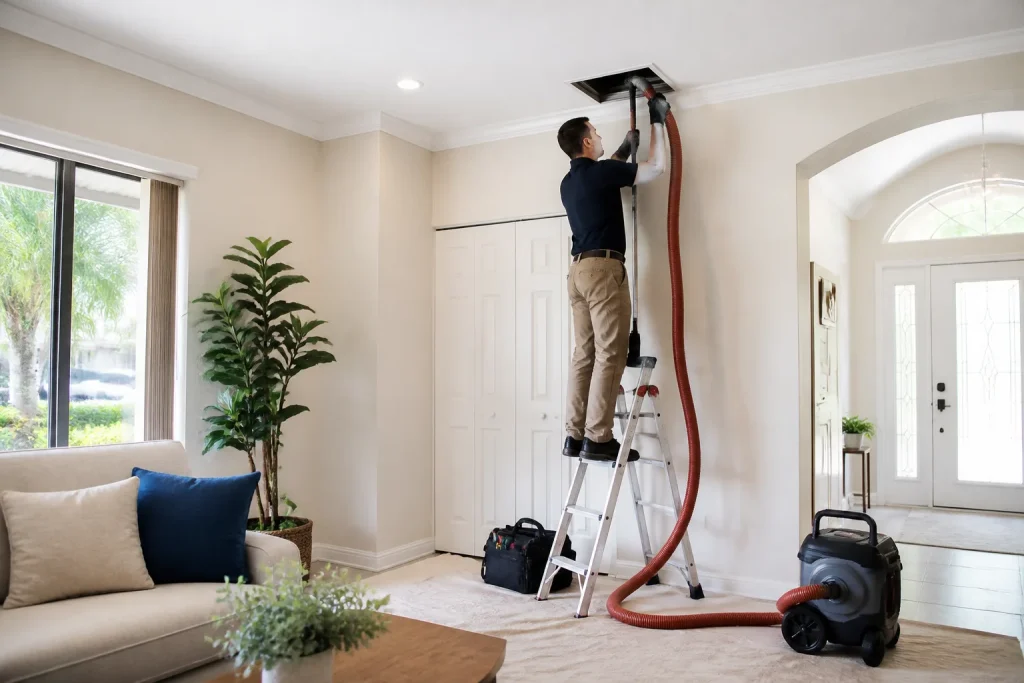
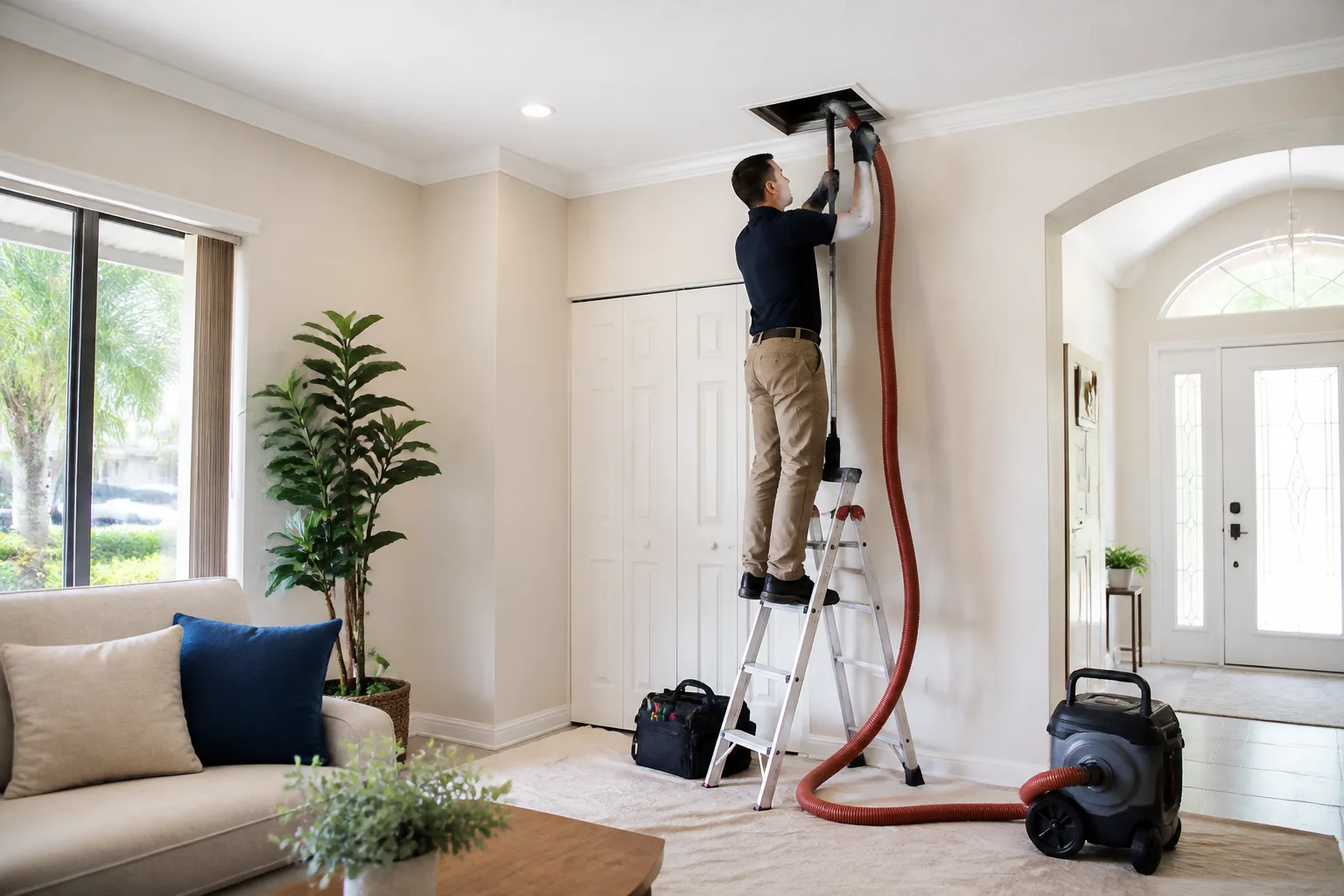
A genuine emergency response is remediation first, cleaning second, and a company that understands this will tell you so on the phone. The remediation phase addresses the source: removing standing moisture, treating microbial growth, and clearing pest debris under containment. Only once the source is controlled does a full cleaning make sense, and rushing that order can spread contamination instead of removing it. This is where professional-grade equipment matters. A contractor using a Rotobrush rotary system and Nikro high-efficiency vacuum does contaminant capture, not just surface sweeping. When you hear that a company uses Harborview Air Duct Cleaning equipment that building engineers trust, that’s the signal you’re dealing with the right tier of tool.
The second phase, the actual cleaning, comes once conditions are safe. Expect the technician to inspect before quoting, because a real assessment takes time. Our technicians have up to experience, and they’ll tell you honestly when a job is a two-visit project versus a single visit. If someone on the phone promises a same-day full clean without ever seeing the mold or the water damage, that’s a red flag, not enthusiasm. A legitimate response will also flag when your situation calls for a licensed mold remediator or a restoration contractor first, and duct work after. We repair ductwork as well as clean it, so when a compromised run or a torn boot is the root cause, we can address it rather than cleaning around a problem that will return.
How Do You Evaluate Same-Day and After-Hours Claims?
Judge a company by equipment and realism, not by how fast they say yes. A credible emergency response requires serious contaminant-capture gear and an honest timeline. Here’s what we’d ask any company before booking.
- Ask what equipment they’ll bring. A rotary brush system and a high-powered HEPA vacuum are the baseline. If the answer is vague, keep calling.
- Ask how long the job takes. A whole-system clean is a scheduled block of work, not a quick pass. Anyone quoting fifteen minutes for a full system isn’t being straight with you.
- Ask whether they’ll do remediation or just cleaning. If mold or water is involved, the answer should mention containment and source control, not just “we’ll vacuum it out.”
- Ask for before-and-after documentation of your own ducts. Photos of the actual work prove it happened.
We answer 24/7, and fast dispatch runs from 7am to 7pm. That’s an honest answer about response, not a promise that every emergency resolves in one visit. If you call with visible mold in Coral Springs, we’ll walk you through shutting things down and schedule the right kind of visit, which may be a scheduled remediation-plus-clean rather than a quick clean.
What Documentation Do You Need for an Insurance Claim?
The paperwork matters as much as the cleaning when a claim is involved. Insurers want proof of the cause, the scope, and the work performed, and gaps in that record are the most common reason claims get trimmed. Gather the following as the job unfolds, not after.
- Before photos with dates. Registers, staining, moisture readings, pest evidence.
- Air quality test results where a test is performed, before and after if possible.
- The contractor’s scope-of-work record, describing what was remediated and what was cleaned.
- Equipment and product records, including air-quality components. If the system uses Honeywell or Aprilaire filtration and humidity control, note it, since those systems interact with duct condition.
- Final invoice tied to the written estimate. The estimate sets the final price, so keep both.
Being able to hand an adjuster a clean, dated file speeds up a claim in Coral Springs more than any phone call to the insurer. Photograph before anything is touched and keep it all in one folder.
When to Call a Pro
If you have water-damaged ductwork, visible mold near a vent, or signs of animals in the system, stop and call a professional rather than running the system or attempting DIY cleanup. Duct interiors hide contamination that’s hard to see and easy to stir up. For routine dust and musty smells, call to schedule air duct cleaning when it’s convenient, not urgently. Either way, a written estimate agreed before work starts means no surprise invoice once a technician is on site, and we can work with your insurer on documented claims. If your dryer vent is also clogged, that’s a separate, genuinely urgent safety matter, and we handle dryer vent cleaning as well.
Frequently Asked Questions
No. Shut the system off at the thermostat instead. Running the fan spreads spores through every room in the house before the source is assessed. Keep doors to affected rooms closed and call a professional to assess the source in Coral Springs.
We set one flat price per system from the written estimate, and the estimate is free. Same-day or urgent timing doesn’t carry a surcharge. Call (844) 761-5395 for an exact quote, and we’ll give you a clear range before anything is booked.
Ask for before-and-after photos of your own ducts, not stock images. A legitimate company documents the actual work performed. Combined with a scope-of-work record, that’s how you confirm the job happened and back an insurance claim.
A whole-system clean is a scheduled block of work, and if remediation is needed first, expect it to span more than one phase. We answer 24/7. A call outside dispatch hours is booked into the next opening, Sunday through Friday, 7am to 7pm. Call (844) 761-5395 for a free estimate.
The Bottom Line
The sequence that protects a Coral Springs household in a real duct emergency is simple: shut the system off, document everything, isolate affected rooms, and call a professional who’ll assess before quoting. Remediation comes before cleaning, and anyone who skips that step to book a fast visit is selling speed, not a fix. Our technicians have up to experience, use professional-grade Rotobrush and Nikro equipment with Abatement Technologies for contaminant capture, and repair ductwork rather than cleaning around a problem. We also work with Lauderhill homeowners if you’re nearby. If you’re in Coral Springs and need help, Harborview Air Duct Cleaning offers free estimates. Call (844) 761-5395. We answer 24/7. Fast dispatch from 7am to 7pm, Sunday through Friday.
Related services in Coral Springs
Pair this with air duct repair for damaged or disconnected runs, and dryer vent cleaning for the safety side of your system. Both are part of looking after your whole system, not just your vents.
Written by the team at Harborview Air Duct Cleaning.
Need Air Duct Cleaning Help?
Call Harborview Air Duct Cleaning - licensed & insured, here with fast help in Coral Springs.
(844) 761-5395