
Last updated November 15, 2026
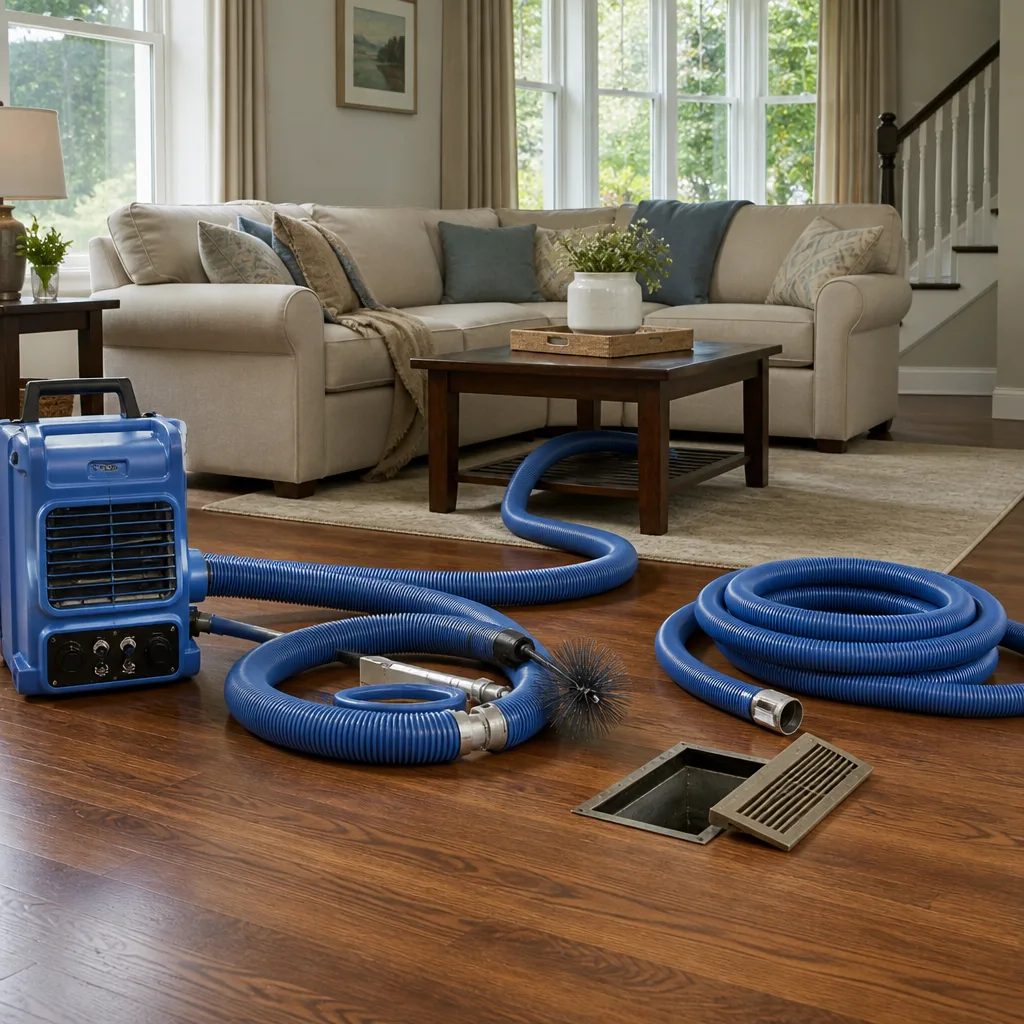 Whole-home duct cleaning
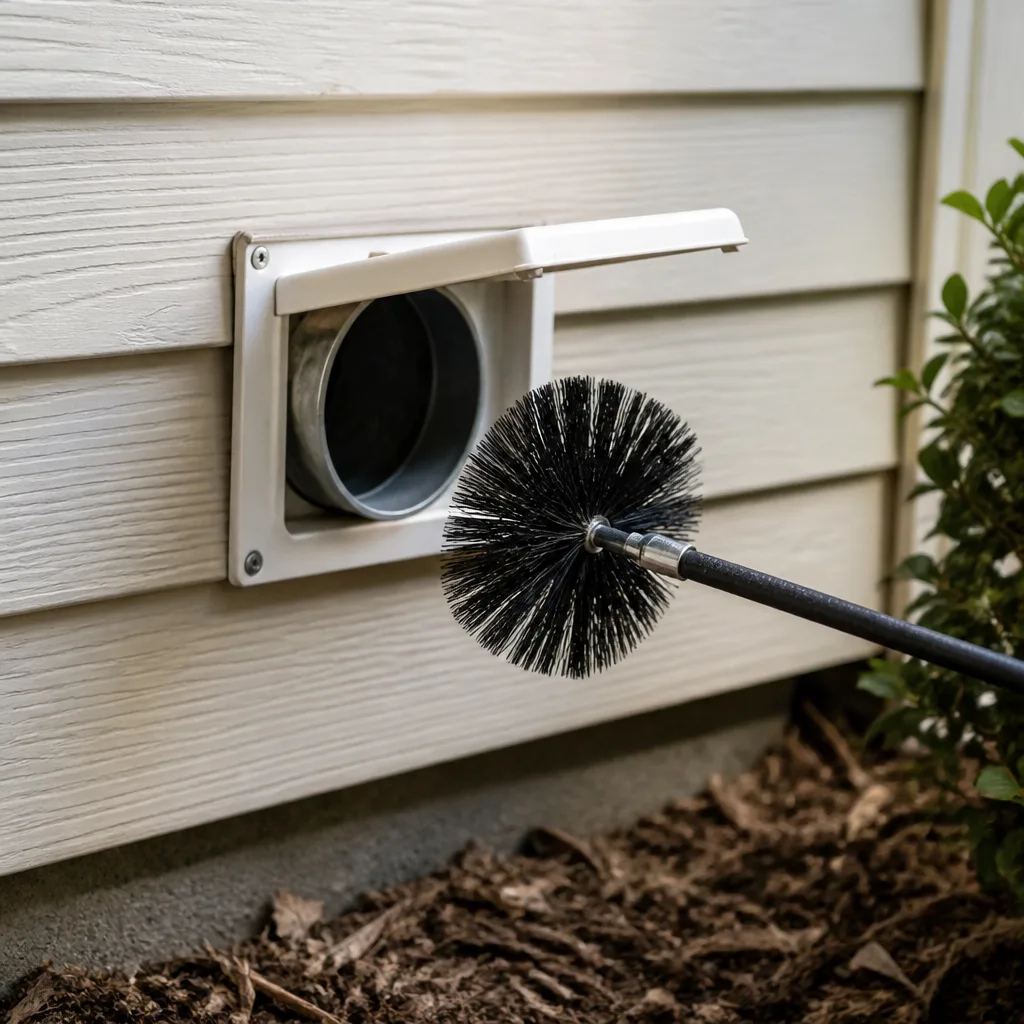 Dryer vent cleaning
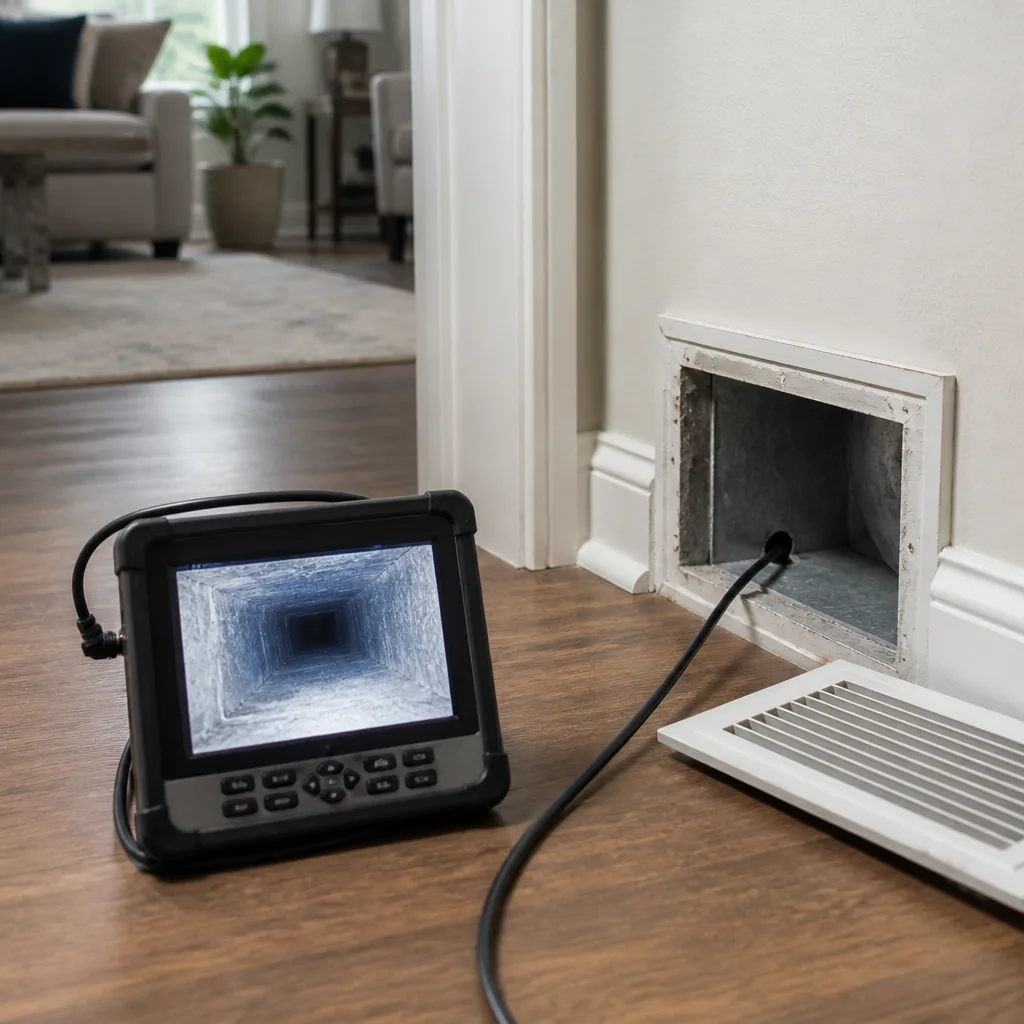 Camera inspection
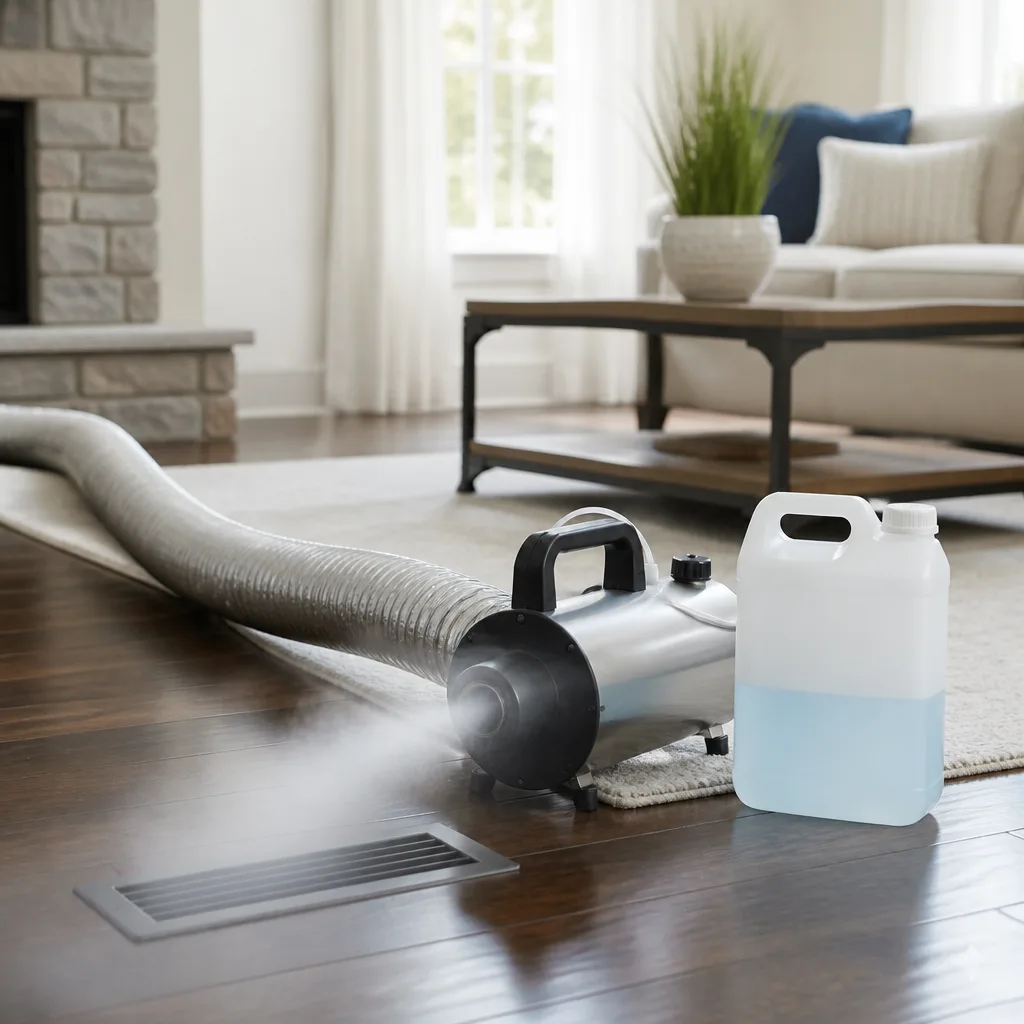 Sanitizing & deodorizing
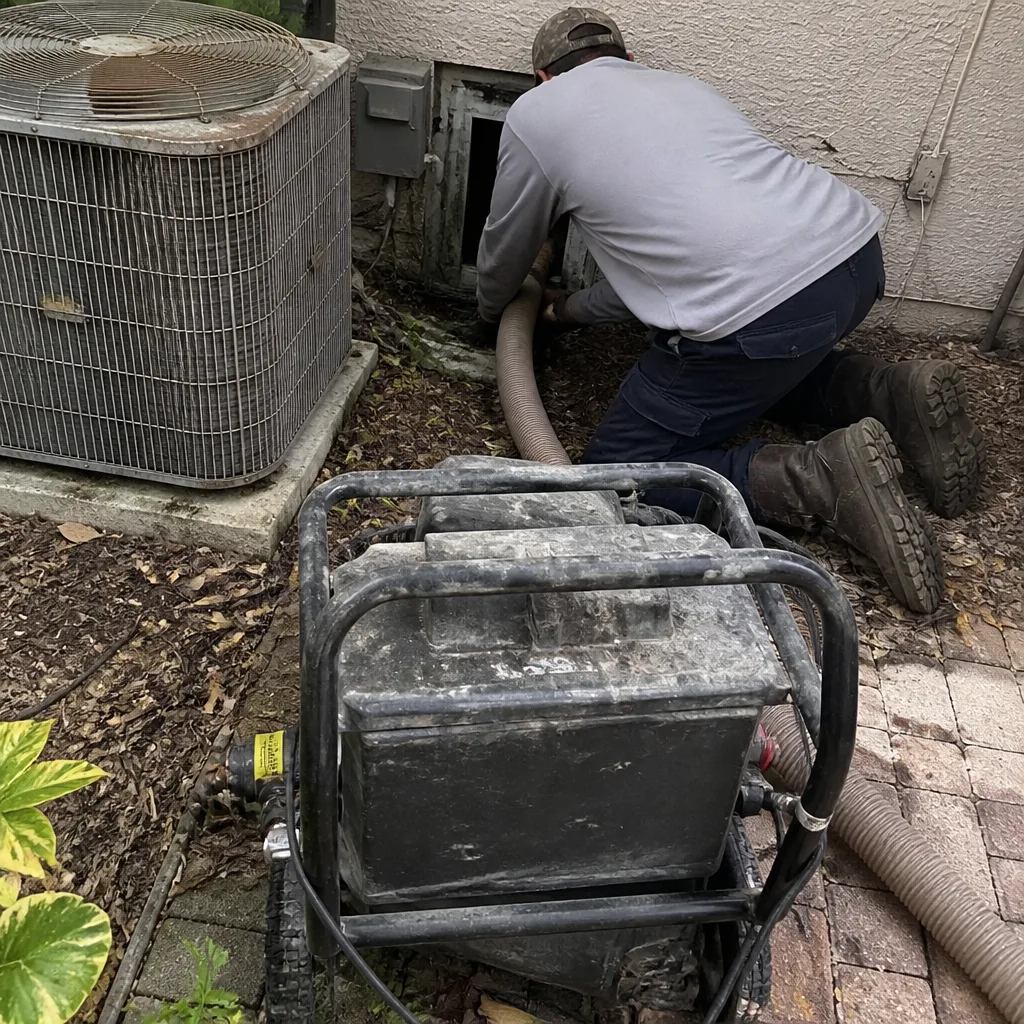
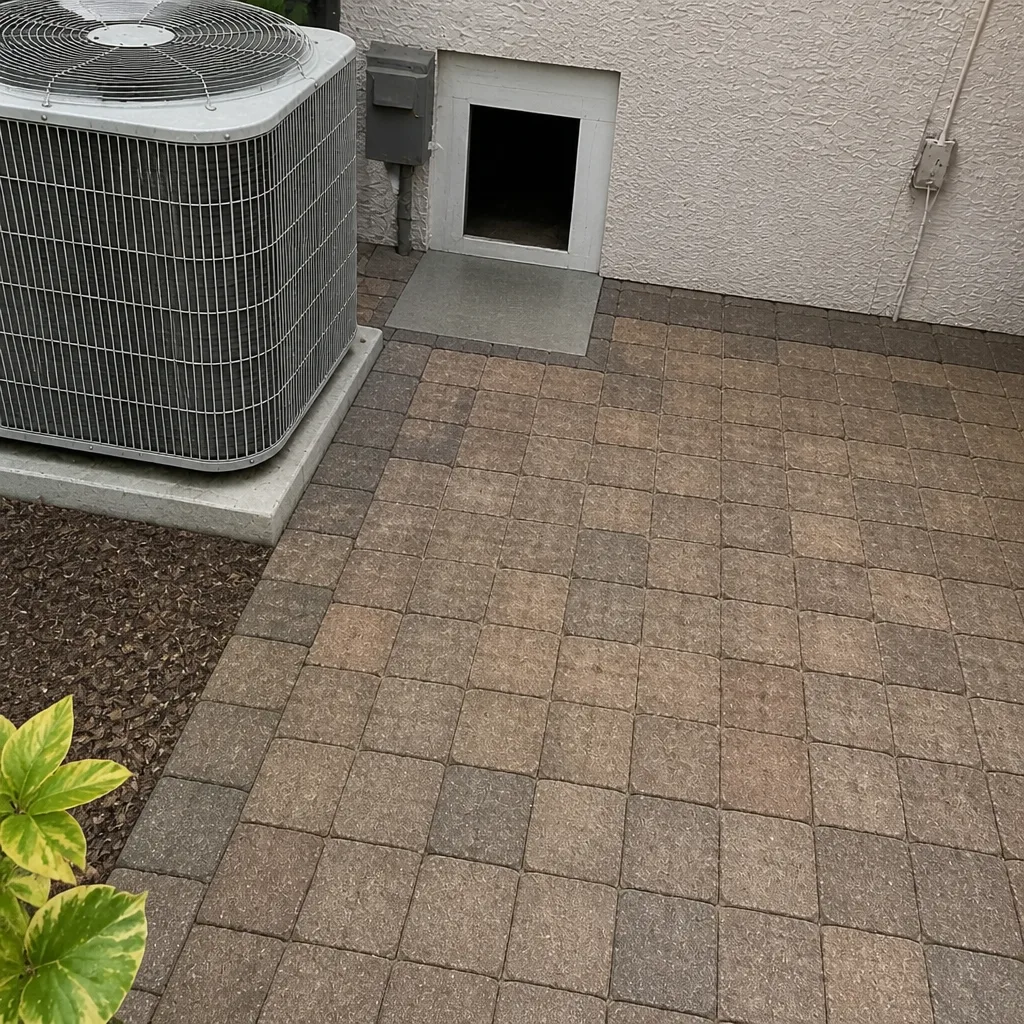
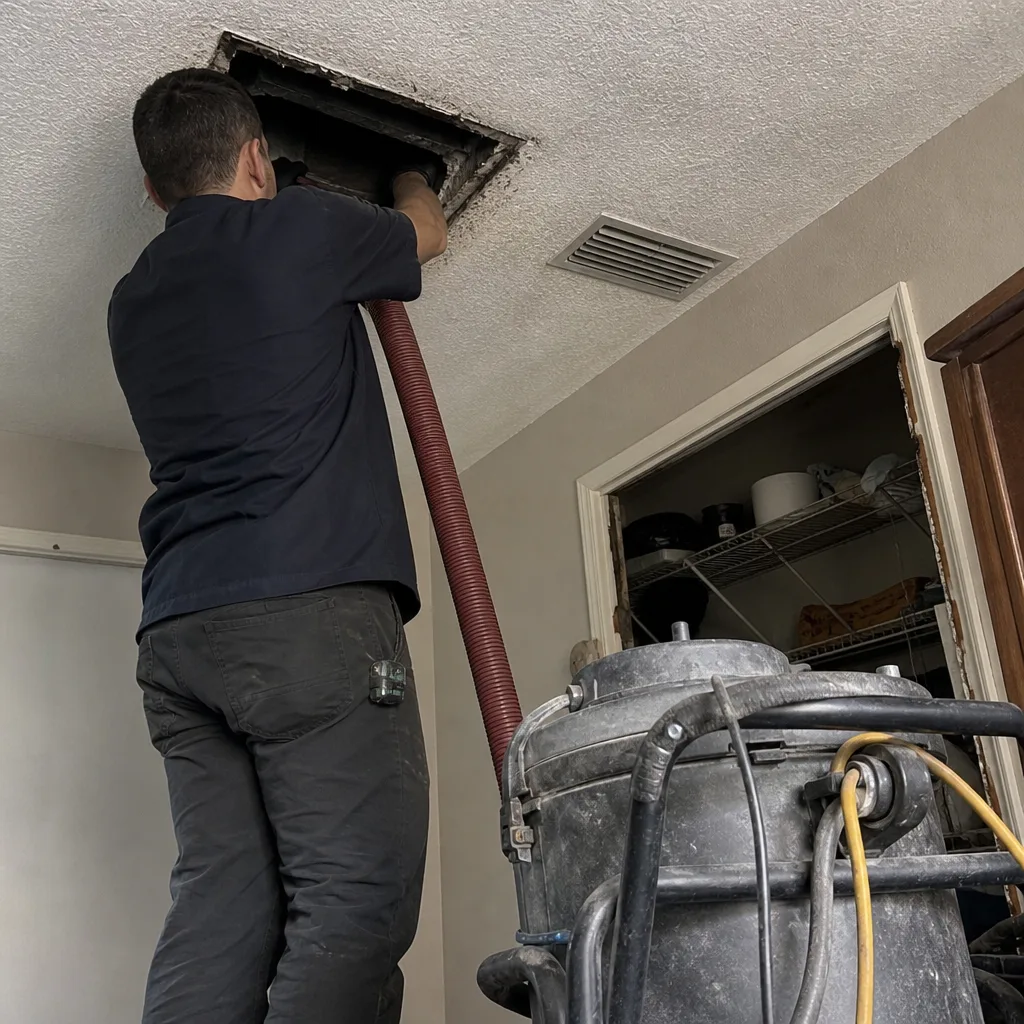
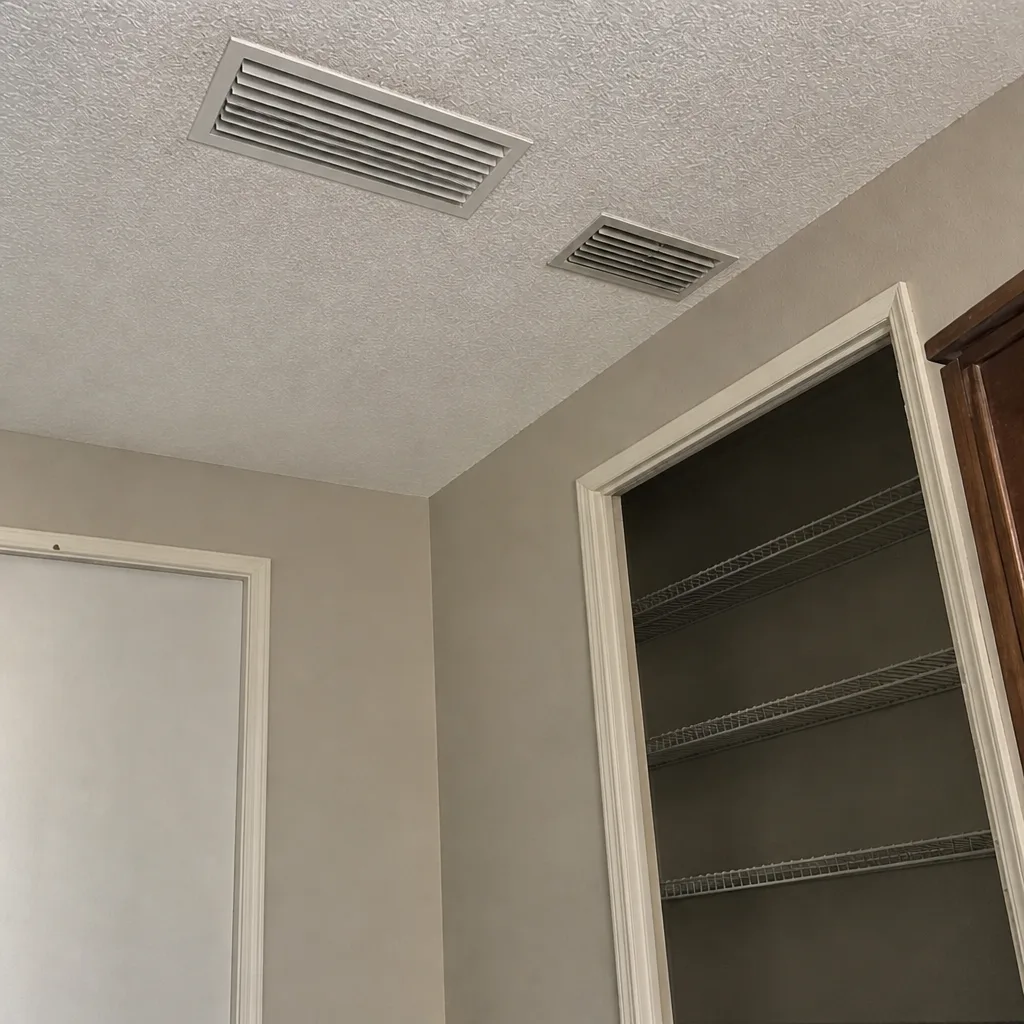
Whole-system duct and dryer vent check with before-and-after photos - you see exactly what came out of your vents
That "$99 whole-house special" is a bait ad - the real number appears once they are in your hallway, or the "clean" is a shop-vac at the register. We photograph the inside of your ducts before and after instead.
DIY vs Professional Air Duct Cleaning: The Coral Springs Homeowner’s Decision Guide
Most DIY duct cleaning advice gets the physics backwards. A homeowner with a shop vac and a brush kit can genuinely improve airflow at the registers, and that part is worth doing. But the tool that makes real duct cleaning work is negative pressure, and a shop vac creates the opposite: it pushes as much fine dust into the room as it pulls out of the run. This guide maps that boundary honestly. We’ll cover what you can do yourself with consumer tools, where the effort hits a hard technical wall, and the Florida-specific risks that make attic work in Coral Springs a different proposition than a tutorial filmed in a basement.
Quick Answer
You can and should handle register and grille cleaning, filter changes, and dryer vent brushing yourself. Deep duct cleaning, though, needs a rotary brush driven through the full run while a high-powered vacuum holds the system under negative pressure from the air handler end, and no consumer tool does that. Professional cleaning also includes duct repair for crushed or disconnected flex runs, which is where a lot of Coral Springs airflow complaints actually originate.
Styles & brands we work with
- Whole-home duct cleaning
- Dryer vent cleaning
- Camera inspection
- Sanitizing & deodorizing
Table of Contents
- What You Can Legitimately Do Yourself
- The Physics Problem: Why a Shop Vac Works in Reverse
- Florida-Specific DIY Risks in Coral Springs Homes
- How DIY Prep Before a Professional Visit Saves Money
- How to Tell a Real Professional From a Capable Homeowner With a Vacuum
- What Professional Air Duct Cleaning Costs in Coral Springs
- Why Duct Repair Changes the Decision
- How Often Ducts Really Need Cleaning Here
What You Can Legitimately Do Yourself
We mean this without a sales pitch attached: a fair amount of what gets marketed as duct cleaning is maintenance a homeowner can do well. Register and grille cleaning, filter discipline, and dryer vent brushing all deliver real results when done with the right tools. The catch is knowing where each task stops being useful.
Here’s what’s genuinely within reach for a Coral Springs homeowner:
- Register and grille cleaning. Remove the supply and return grilles, wash them in a utility sink with mild soap, dry them fully, and wipe the boot opening you can reach with a damp microfiber cloth. A soft vent brush helps on stubborn buildup. This improves airflow and removes visible dust at the point where you actually notice it.
- Filter upgrades and changes. Check the filter monthly in summer, when the system runs hardest in Coral Springs. A filter that’s visibly grey should have been changed a week ago. If you run a Honeywell or Aprilaire media cabinet, buy the correct replacement size rather than the nearest match; a poorly seated filter leaks air around its edges and bypasses the whole point.
- Dryer vent brushing. A flexible dryer vent brush kit, a vacuum with a crevice tool, and fifteen minutes at the exterior termination can meaningfully reduce lint accumulation. Detach the vent from the dryer first, brush from both ends, and vacuum out what loosens. Never leave the vent disconnected after cleaning.
- Condensate drain line flushing. In a South Florida cooling season that runs nearly year-round, the AC condensate line clogs with algae. Pouring a cup of white vinegar down the access port monthly is a legitimate homeowner task that prevents a wet ceiling.
- Coil access cleaning where it’s safe. Wiping the accessible face of an evaporator coil or clearing debris from around the outdoor condenser is fine. Anything past that is a technician’s job.
None of this requires a professional, and we’d rather tell you so than sell you a visit you don’t need. What it does require is a realistic sense of the limit.
The Physics Problem: Why a Shop Vac Works in Reverse
This is the part most DIY guides skip, and it’s the whole argument. Real duct cleaning is source removal under negative pressure. The vacuum connects at the air handler or a main trunk, the system is sealed off, and the machine pulls the entire duct run into a pressure state where air moves toward the vacuum, not toward your living room. A rotary brush then travels down each run, agitating debris loose so the vacuum can capture it. Every bit of loosened dust travels toward the machine.
A shop vac at a register does the exact reverse. You’re standing at the supply end, which is the wrong end. The vacuum pulls air toward you through the register, which sounds helpful, but as soon as the brush agitates dust deeper in the run, the pressure differential across the rest of the ductwork is unchanged. Dust lifts, drifts, and a good portion of it settles back where it was or floats into the room. A consumer attachment that claims to clean “the whole duct” through a 4-inch opening is simply too small and too weak to move air through a 20-foot flex run.
What professional negative pressure actually involves
- A high-powered vacuum unit, like the Nikro systems we run, connects to the main trunk or plenum and pulls the entire duct system into negative pressure.
- Registers are sealed with foam or plastic so air enters only where the technician opens the system.
- A rotary brush on a flexible shaft, like the Rotobrush platform, travels each run and scrubs the duct walls.
- Loose debris is captured at the vacuum end, not at the register, while Abatement Technologies equipment handles fine particulate and contaminant capture.
- The system is inspected, and any crushed or disconnected runs are identified for repair.
The detail that separates real cleaning from surface work is step four. If the debris isn’t captured, it’s just been relocated. That’s the hard technical wall, and it isn’t a matter of buying a bigger shop vac.
Florida-Specific DIY Risks in Coral Springs Homes
Coral Springs homes present specific hazards that DIY tutorials rarely address, mostly because those tutorials are filmed in a basement in Ohio. Here, the ductwork is almost always in the attic, and the attic in July is a legitimate health hazard, not an inconvenience.
- Attic heat. Attic temperatures in South Florida routinely climb past what a person can safely work in for more than a short burst. Heat exhaustion comes on fast, and the combination of heat, humidity, and limited footing makes attic work a genuinely risky DIY project in summer. If you’re going into the attic at all, do it early in the morning, hydrate beforehand, and have someone aware you’re up there.
- Flex duct connections. A large share of Coral Springs homes use flexible duct in the attic. Flex duct is easy to crush, kink, or detach at the collar. A homeowner wiggling a shop vac hose around a boot connection can dislodge a run and dump conditioned air into the attic, which shows up as a hot room and a higher power bill. Reconnecting it correctly requires tape rated for the job and a properly seated collar.
- Live air handler components. The air handler contains the blower, electrical connections, and often the evaporator coil. Even with the thermostat off and the breaker pulled, capacitor charge and hidden wiring make this a place to keep hands out of. We don’t recommend any homeowner open an air handler cabinet.
- Condensate and return plenum proximity. Ductwork in the attic sits near the condensate pan and drain. A bumped drain line means water in the ceiling below, and that’s a far more expensive problem than dirty ducts.
If your system’s ductwork is in the attic and you’re not comfortable with the access, the honest answer is that professional cleaning is the safer route in Coral Springs. That’s not a sales tactic; it’s a heat-and-electrical-risk assessment.
How DIY Prep Before a Professional Visit Saves Money
Here’s where DIY and professional cleaning combine well. A homeowner who does the prep work beforehand gets a better result and often a smaller bill, because the technician spends time on the ducts instead of on grilles. Think of prep as the part of the job that doesn’t need negative pressure.
- Clear access to the air handler and registers. Move furniture away from supply and return grilles, and clear a path to the air handler closet or attic access. This alone can shave time off the visit.
- Remove and wash all grilles and registers yourself. Wash, dry, and set them aside. Many cleaners charge by the grille; doing this yourself means the technician’s time goes entirely to the ductwork.
- Photograph what you can see. Take clear phone photos of dusty grille interiors, visible debris on the boot, and any register with weak airflow. Photos help the technician identify problem runs faster and give you a before reference to compare against their after photos.
- Note the problem rooms. Write down which rooms feel stuffy, which registers barely blow, and whether any room gets dusty faster than the rest. This guides the technician’s inspection and often points to duct repair rather than cleaning.
- Change the filter. A clean filter before and after the visit is standard practice. Install the right size for your Honeywell or Aprilaire cabinet, and note which filter you’re using so the technician can check compatibility.
- Document your air quality system. If you have a whole-home filtration or humidity system, note the brand and any recent service. Knowing a home runs Aprilaire filtration changes how the technician assesses duct cleanliness, because the ducts interact with that system.
None of this replaces cleaning. What it does is make the professional visit shorter, more focused, and easier to verify. Prep is the DIY half. Source removal is the professional half.
How to Tell a Real Professional From a Capable Homeowner With a Vacuum
This matters because the market has plenty of operators whose equipment and process are barely above what a capable homeowner could rig up. Plenty of consumer-grade work gets sold as professional cleaning. Here’s what to look for when comparing quotes for air duct cleaning in the area, or anywhere in South Florida.
Equipment markers that justify the professional price:
- A truck-mounted or high-powered portable vacuum unit connected at the air handler or main trunk, not a shop vac at the register. Ask what unit they use. If the answer is vague, that’s the answer.
- Negative pressure verified. The technician should seal the registers and confirm the system is under vacuum before brushes go in.
- Rotary brush systems like Rotobrush that actually scrub the duct walls, not just blow air through the run.
- Contaminant capture equipment like Abatement Technologies for fine particulate. This is the difference between moving dust and removing it.
- Air quality brand familiarity. If the technician doesn’t recognize a Honeywell or Aprilaire filtration setup, they’re not assessing the full system.
- A real inspection. Ducts should be inspected for crushed or disconnected runs, not just cleaned. A cleaner who can’t identify duct repair needs is only doing part of the job.
- Before-and-after photos of your ducts. Not stock photos. Your ducts, both states.
Red flags: a coupon price far below the local market, per-vent pricing that changes on site, no vacuum connected at the air handler, and a technician who can’t describe the process in plain terms. If the crew arrives with a shop vac and a compressor, you’re paying professional prices for home-grade work.
The test is simple: if the service being offered doesn’t require equipment and process beyond what a capable homeowner could assemble, it isn’t professional cleaning. It’s a premium-priced version of what you could do yourself.
What Professional Air Duct Cleaning Costs in Coral Springs
South Florida pricing for a typical single-family home with a standard duct layout runs roughly $350 to $700 for a full whole-system clean under negative pressure, and most Coral Springs homes fall in that range. Larger homes with two systems, or homes with significant contamination, run higher. Dryer vent cleaning is a smaller line item, usually $100 to $200 on its own.
The number that matters far more than the range: one flat price per system, agreed before work starts. The bait-and-switch complaint in this industry is nearly always a coupon price that grows on site. Ask for the flat price before anyone touches the air handler, and ask what the price includes.
Here’s what an honest estimate itemizes:
- Whole-system cleaning under negative pressure – roughly $350 to $700 for a typical Coral Springs home, priced per system rather than per vent.
- Rotary brush agitation of each run – included in the whole-system price at any legitimate operation.
- Dryer vent cleaning – roughly $100 to $200, or bundled with duct cleaning in some quotes.
- Duct repair, if needed – varies by damage. A simple reconnection is a small add. A crushed run that needs replacement is more. This is where air duct repair becomes the real value of a professional visit.
- Before-and-after photos – free, and standard.
Why are some quotes so much cheaper? Usually because the work is cheaper: a shop vac at the register, no negative pressure, no rotary brush, per-vent pricing that grows, and no repair capability. You’re not getting a discount; you’re getting a different service.
Call (844) 761-5395 for a free estimate. We answer 24/7. Fast dispatch from 7am to 7pm, Sunday through Friday. The flat price is set per system by the written estimate before any work starts, and it doesn’t change once the technician is on site.
Why Duct Repair Changes the Decision
Here’s what the DIY-versus-professional question often misses. A lot of Coral Springs airflow complaints aren’t about dust at all. They’re about a crushed or disconnected flex duct in the attic, a run that fell off its collar years ago, or a return that’s pulling attic air instead of return air. Cleaning a disconnected duct does nothing. The air handler doesn’t see it.
This is where the professional visit earns its keep beyond cleaning. A technician who inspects the runs as they clean catches the broken connection, the collapsed segment, and the boot that’s been dumping conditioned air into the attic. Repairing those is where the system actually recovers performance, and it’s the reason we say we repair what others just clean around.
A residential technician walking your ductwork looks for:
- Runs that are disconnected at the collar or plenum
- Flex duct that’s crushed, kinked, or sagging under its own weight
- Boots that aren’t sealed to the drywall or subfloor
- Returns that pull from attic space instead of living space
- Duct runs that were improperly supported or routed during renovation
If your home was built or renovated recently, or you’ve had contractors in the attic, this list is worth a professional inspection. A homeowner with a shop vac won’t catch these; the repairs require tape, collars, and an understanding of how the system is supposed to move air.
How Often Ducts Really Need Cleaning Here
Most Coral Springs homes are fine with a full professional cleaning every three to five years, not annually. Annual duct cleaning is a hard sell in this industry, and it’s rarely necessary in a home with a properly maintained filter and no source of heavy contamination.
What pushes the timeline shorter:
- Recent renovation. Drywall dust, sawdust, and construction debris settle in the ducts and stay there. Clean after renovations, always.
- Pets in the home. Multiple animals mean more hair and dander circulating. Consider every two to three years.
- Visible dust at the registers that returns within a week of cleaning them. That’s a sign of debris deeper in the system.
- Musty smell when the AC runs. Often a sign of moisture or biological growth in the ducts or on the coil. Worth investigating, not just cleaning.
- Recent move-in. You don’t know how the previous owners treated the system. A one-time inspection is reasonable.
- Allergy symptoms that worsen indoors. Not a duct diagnosis on its own, but a sign to inspect.
What pushes the timeline longer: a well-sealed system, a maintained filter, and no pets or recent renovations. In that case, five years between cleanings is more common than three. “How often” depends entirely on the home, not a maintenance schedule sold over the phone.
Common Mistakes to Avoid
- Assuming a shop vac at the register counts as duct cleaning. It doesn’t. The physics are wrong. You’ll loosen dust that then resettles or lands in the room. If you want to improve the system, either do the register-and-filter prep properly or hire the full job.
- Going into the attic in the middle of the afternoon. Coral Springs attic temperatures in summer are a genuine hazard. If you’re going up, go early, bring water, and tell someone. The safety margin here is thin.
- Pulling on flex duct to “check” the connection. Flex duct is easy to dislodge, and once a run is off its collar, you’ve created a problem that needs a professional repair to fix. If it looks loose, photograph it and hand the photo to the technician.
- Accepting a coupon price as the final price. The industry has a bait-and-switch reputation for a reason. Ask for the flat price per system before work starts, and get it in writing. A price that changes once the technician arrives was never the real price.
- Hiring a cleaner who can’t do repair. If the operator only cleans, they can’t fix the disconnected run they just discovered. Look for a company that does cleaning and air duct cleaning and repair under one roof.
- Changing the filter once a season in summer. In Coral Springs, the system runs nearly year-round. Check monthly during cooling season. A clogged filter is harder on the blower than anything in the ducts.
- Assuming musty air means dirty ducts. It could be a wet coil, a clogged condensate pan, or biological growth at the air handler. A duct cleaning won’t fix a moisture problem. Ask for an inspection, not just a cleaning.
See the difference
 Before
 After
 Before
 After
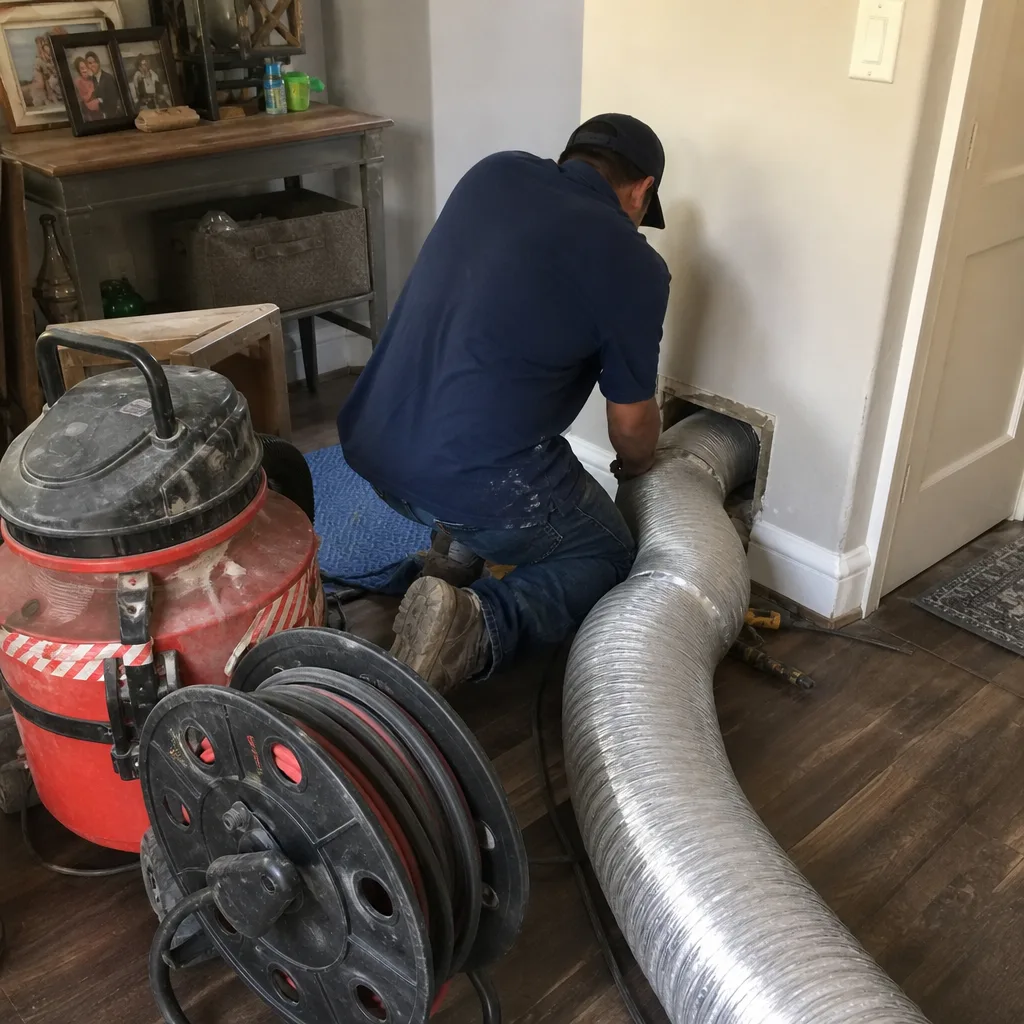 Before
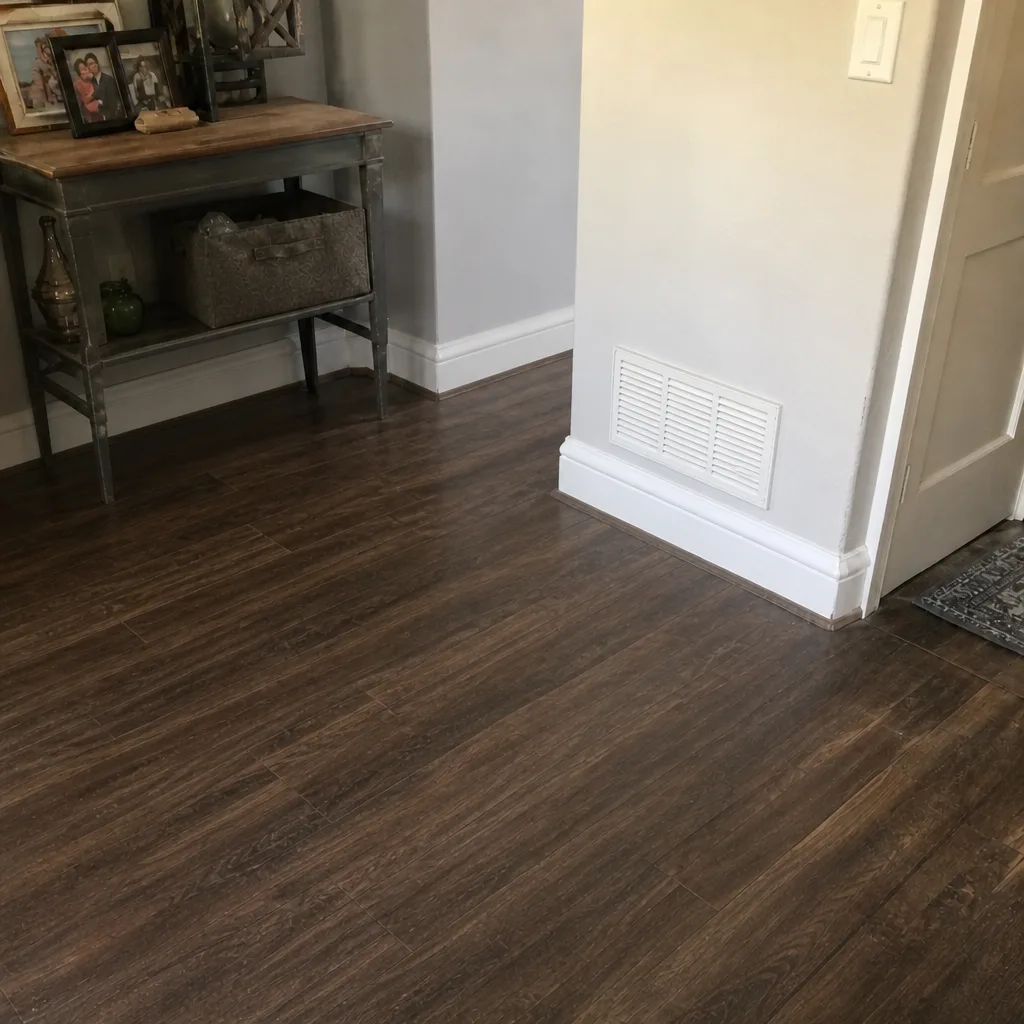 After
When to Call a Professional
Call a professional when the work requires negative pressure, attic access in summer heat, or working near live electrical components. Specifically: you have visible dust returning to registers within days of cleaning them, you’ve had recent renovations, you smell musty air when the system runs, you have a room that gets no airflow, or you suspect a duct is disconnected or crushed. Those are all professional territory. Any of them could be a duct repair rather than a cleaning, and only an inspection will tell you which.
Harborview Air Duct Cleaning offers free estimates in Coral Springs. Call (844) 761-5395. We answer 24/7. Fast dispatch from 7am to 7pm, Sunday through Friday. The estimate sets a flat price per system before work starts, and the technicians use the same Rotobrush and Nikro systems commercial contractors rely on.
Frequently Asked Questions
You can clean registers and grilles with a shop vac, and you can reach a short section of boot, but you cannot achieve source removal in the duct runs. Real cleaning requires negative pressure from the air handler end so loosened debris travels toward the vacuum, and a shop vac at a register does the opposite. The result is dust lifted and redistributed rather than removed.
Roughly $350 to $700 for a typical whole-system clean under negative pressure, with larger or two-system homes running higher. The number that matters is the flat price per system, agreed before work starts. Call (844) 761-5395 for an exact quote; estimates are free.
Usually because the work is cheaper: a shop vac at the register, no negative pressure, no rotary brush, and no repair capability. A quote that’s half the local market is a different service, not a discount. Ask what equipment they connect and where, and ask for the flat price per system in writing. Call (844) 761-5395 for an honest range on a real whole-system clean.
Ask for before-and-after photos of your own ducts, not stock images, and ask the technician to walk you through what they found. A legitimate cleaner will show you the disconnected run or the crushed flex; an illegitimate one won’t let you watch. Call (844) 761-5395 and ask for the photos as part of the estimate.
Every three to five years for most homes, not annually. Recent renovations, pets, and visible dust returning to registers move the timeline shorter. Annual cleaning is a hard sell and rarely necessary. Call (844) 761-5395 and we’ll give you a straight answer on your home rather than a schedule.
Often not, if the registers are clean and you have no symptoms. But the reason to call is inspection, not cleaning. A crushed flex run or disconnected boot won’t show up in the register, and that’s where professional inspection earns its keep. Call (844) 761-5395 for a free estimate and an honest read on whether you need the full job.
The Bottom Line
DIY duct cleaning has a real ceiling, and it’s lower than most guides admit. Register cleaning, filter discipline, and dryer vent brushing are genuinely worth doing yourself, and doing them well before a professional visit makes that visit shorter and more focused. What you can’t do is achieve source removal under negative pressure, and no consumer tool gets there. In Coral Springs, the attic access and summer heat close the gap a little further, because the work involves a real heat and electrical risk that’s not worth taking on. Hire the repair capability, not just the cleaning. And demand a flat price per system before work starts.
If you want a straight answer on whether your Coral Springs home needs the full clean or just a repair, Harborview Air Duct Cleaning offers free estimates across the area, and we’re glad to do dryer vent cleaning as a standalone if that’s what you need. We also serve nearby Lauderhill and the surrounding communities. Call (844) 761-5395. We answer 24/7. Fast dispatch from 7am to 7pm, Sunday through Friday. One flat price per system, agreed before work starts, with before-and-after photos of your ducts and a satisfaction guarantee.
Written by the team at Harborview Air Duct Cleaning.