
Last updated November 15, 2026
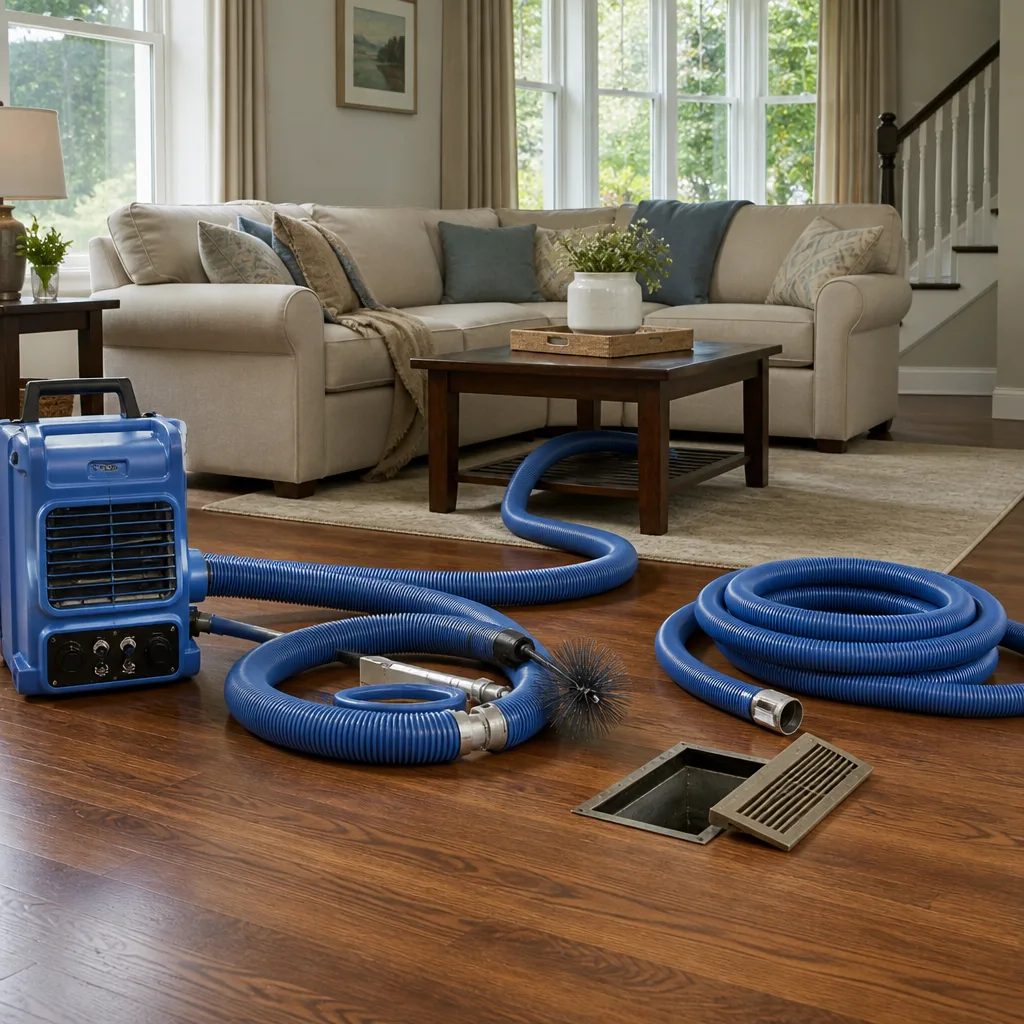 Whole-home duct cleaning
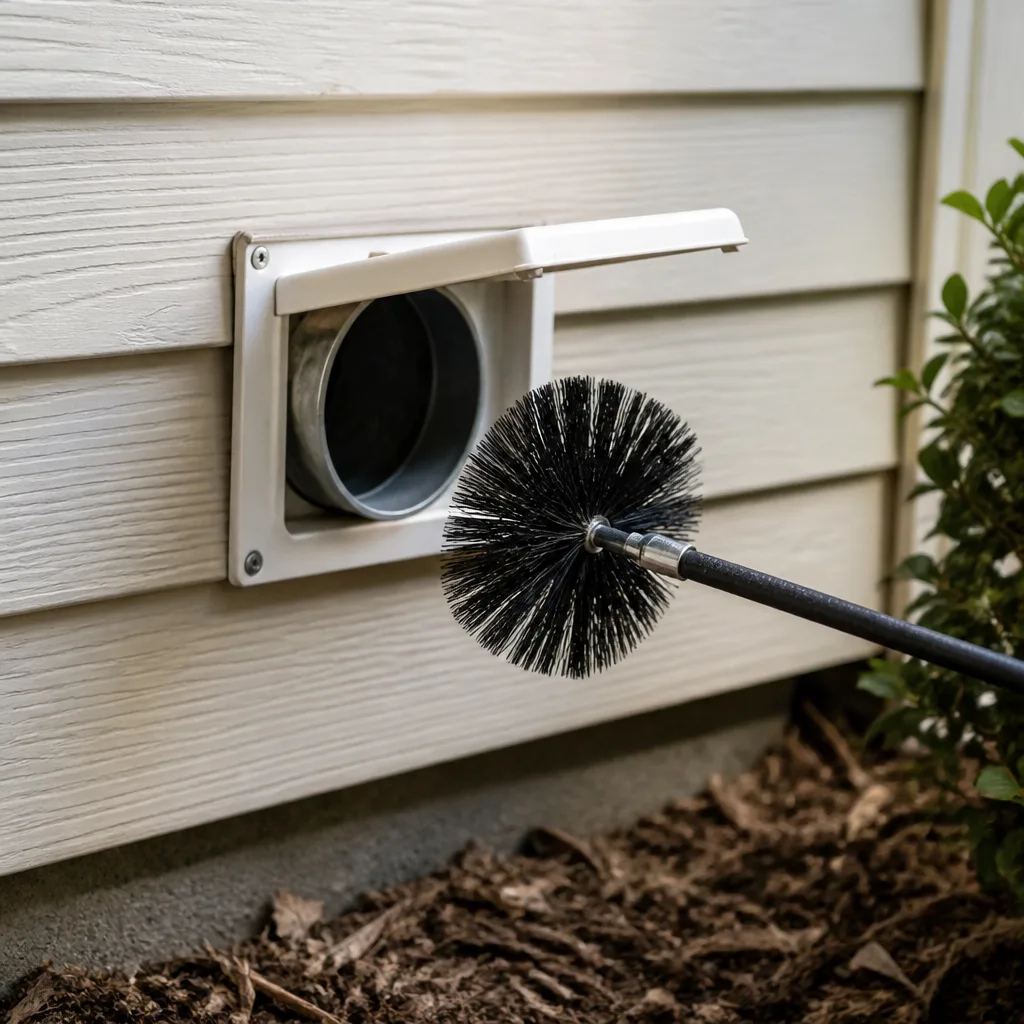 Dryer vent cleaning
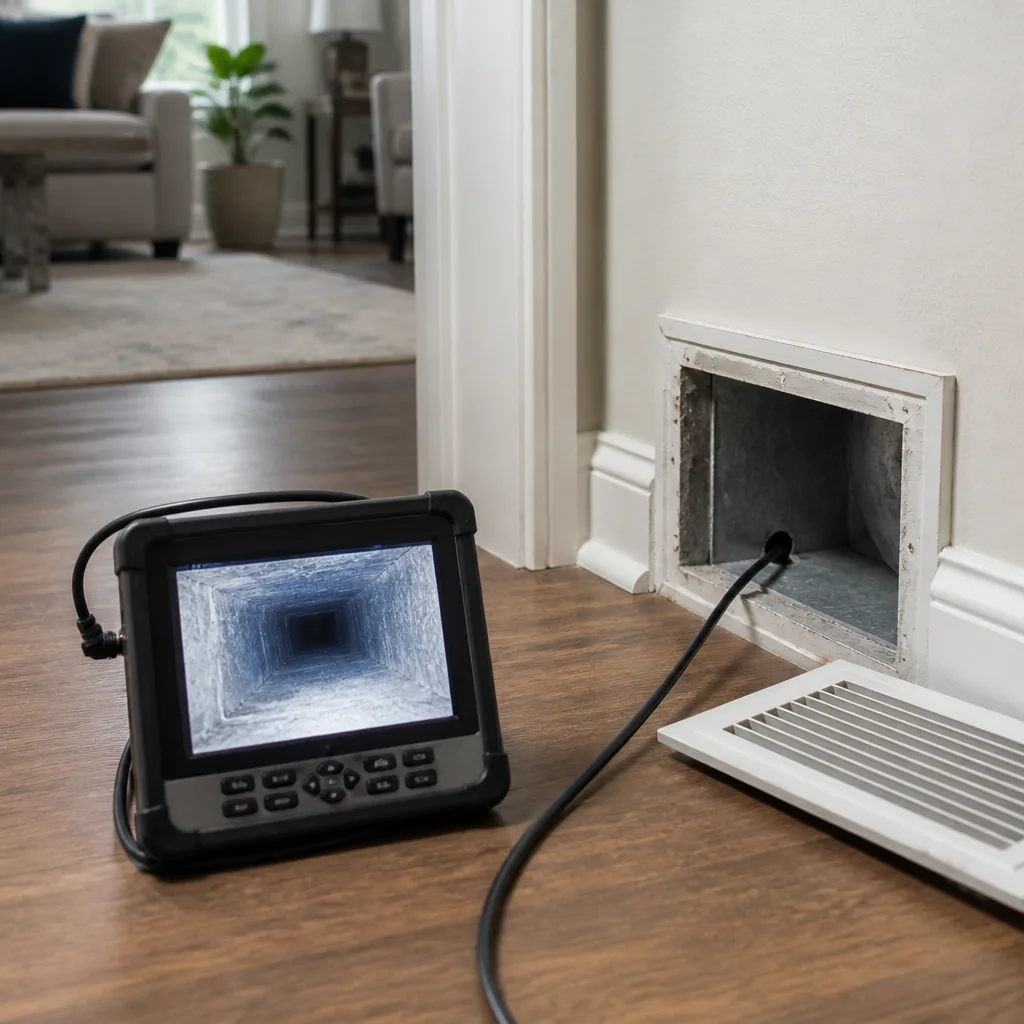 Camera inspection
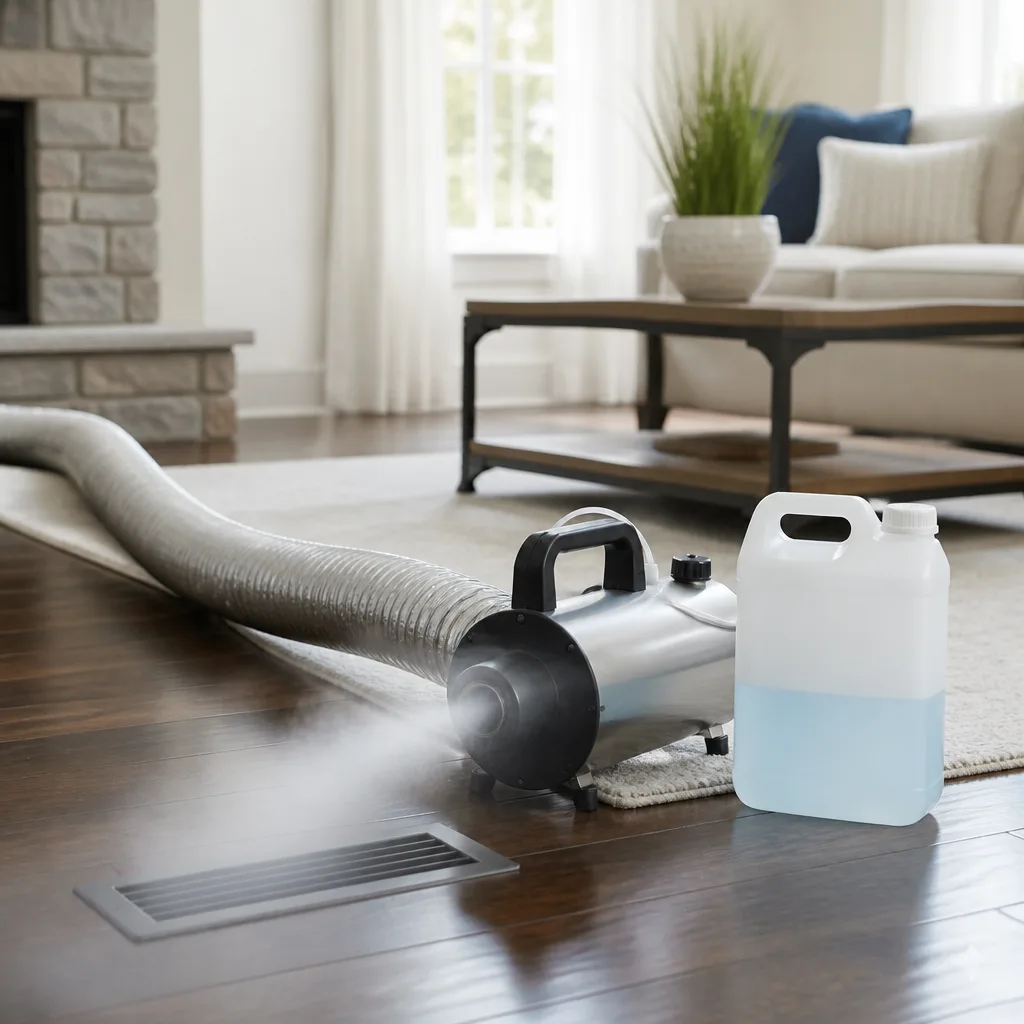 Sanitizing & deodorizing
Whole-system duct and dryer vent check with before-and-after photos - you see exactly what came out of your vents
That "$99 whole-house special" is a bait ad - the real number appears once they are in your hallway, or the "clean" is a shop-vac at the register. We photograph the inside of your ducts before and after instead.
The Complete Guide to Air Duct Cleaning in Coral Springs
Here’s a fact that surprises most homeowners: the air handler closet is usually the dirtiest part of the system and the one part almost nobody cleans. A low-bid crew will pull debris from the visible runs, pack up, and leave the evaporator coil, blower wheel, and drain pan exactly as they found them. Within weeks the same debris is back in circulation. In Coral Springs, where the AC runs most of the year, that cycle happens faster than almost anywhere else in the country. This guide explains what whole-system cleaning actually covers, what equipment to verify on-site, and how to tell a real source-removal job from a surface pass.
Quick Answer
Air duct cleaning in Coral Springs should address the entire air system – supply and return ducts, the evaporator coil, blower wheel, drain pan, and grilles – not just the ducts alone. Cleaning ducts while leaving the coil and blower untouched lets the system recontaminate itself within weeks. A professional job uses rotary brush equipment and high-powered vacuum capture, and it ends with before-and-after photos and a written inspection.
Styles & brands we work with
- Whole-home duct cleaning
- Dryer vent cleaning
- Camera inspection
- Sanitizing & deodorizing
Table of Contents
- Why Most Coral Springs Homes Have a Dirty System, Not Dirty Ducts
- How South Florida Humidity Changes What Grows in Your Ductwork
- Source-Removal Cleaning vs. Blow-and-Go: What to Verify On-Site
- The Components Beyond Your Ducts That Must Be Cleaned
- How Home Age and Construction Type Affect Duct Cleaning in Coral Springs
- What a Whole-System Cleaning Actually Involves, Step by Step
- What a Post-Cleaning Inspection and Documentation Should Include
- How Often Ducts Really Need Cleaning in South Florida
Why Most Coral Springs Homes Have a Dirty System, Not Dirty Ducts
When a homeowner calls because the house feels dusty or the air smells stale, the assumption is almost always the same: the ducts are dirty. Sometimes they are. But in our experience, the debris sitting in the ducts is usually a symptom, not the source. The source lives in the air handler.
Think of it this way. Washing one side of a window doesn’t make the window clean. Cleaning the ducts while leaving the evaporator coil coated in dust and the drain pan holding standing moisture does the same thing to your air system. Air passes over that coil on every cycle, picks up whatever is growing there, and carries it back into the ductwork you just paid to clean.
Here’s what the air handler typically contains that most cleaning services never open:
- The evaporator coil. A dense fin-and-tube assembly that condenses moisture out of the air. Dust sticks to wet fins and stays.
- The blower wheel. A squirrel-cage fan that spins constantly. Its blades collect a mat of dust that reduces airflow and stresses the motor.
- The drain pan. Sits under the coil collecting condensation. Warm, dark, and wet – a spot where biological growth takes hold.
- The return plenum. The box between the return grille and the air handler. Out of sight, and often the single dirtiest section of the whole system.
This is the difference between cleaning vents and cleaning a system, and in Coral Springs it’s the distinction that determines whether a cleaning lasts one season or several. Our approach is built around that fact. Harborview Air Duct Cleaning treats the coil, blower, and drain pan as part of the job, not an optional line item.
How South Florida Humidity Changes What Grows in Your Ductwork
Coral Springs doesn’t get a real heating season. The AC typically runs most months of the year, which means the system never fully dries out the way a northern system does during winter. That near-year-round runtime has two consequences for ductwork.
First, accumulation happens faster. A duct system that gets a seasonal break from moving air also gets a seasonal break from dust being pulled through it. Here, dust, pollen, and lint load into the return system continuously. What would take a few years to build up in a cooler climate can build up in a fraction of that time.
Second, ongoing moisture plus continuous airflow creates the conditions for biofilm – a film of microorganisms that clings to surfaces. You don’t need standing water for this. A coil that’s wet from condensation on every cycle, combined with an air stream carrying organic dust, is enough. Homeowners often describe the symptom before they can name the cause: a musty smell when the system first kicks on, or a stale odor that fades once the air has been running for a while.
This is why a cleaning that only removes visible debris misses the point. Surface debris removal without addressing the wet components just resets the clock. If you’ve ever had a cleaning and noticed the musty smell return within a month or two, the humidity cycle is almost certainly why. An air duct cleaning job that opens the air handler and cleans the coil and pan changes that outcome.
We’ve seen humidity-driven buildup in every part of Coral Springs, from the older single-family neighborhoods near the center of the city to the newer construction on the western side. The mechanism is the same. The difference is how the system was configured.
Source-Removal Cleaning vs. Blow-and-Go: What to Verify On-Site
There are two broad schools of duct cleaning, and the gap between them is wider than most homeowners realize.
Blow-and-go means compressed air or a shop vacuum, often no containment, and no access to the air handler. Loose debris gets stirred up and pulled out through a hose, but debris stuck to the duct walls stays put. Worse, blowing air through an unsealed system can push contaminants into living spaces.
Source-removal cleaning means mechanically agitating the duct surfaces – brushing them – while a high-powered vacuum pulls the loosened material out under negative pressure. The agitation is what separates the debris from the duct wall. The vacuum capture is what keeps it out of your air. Both halves matter, and neither works well without the other.
The good news is that the equipment is verifiable. You don’t have to take anyone’s word for the approach – you can watch what actually gets carried into your home. Here’s what to look for:
- A rotary brush system. Professional setups like the Rotobrush platform use a spinning brush head fed through the duct runs. If you see a shop vac and a loose hose, that’s not agitation cleaning.
- A high-powered vacuum with real filtration. Nikro vacuum systems are built to capture fine particulate during the job rather than exhausting it back into the room. Ask whether the vacuum is HEPA-filtered and where it exhausts.
- Containment or negative pressure. Abatement Technologies equipment is standard in environments where contaminant control matters. Its presence is a signal that the contractor treats capture as seriously as removal.
- Sealed work areas. Registers should be taped or otherwise covered during the job so loosened material can only travel toward the vacuum.
- Access into the air handler. If nobody opens the air handler panel, the coil and blower aren’t getting cleaned. That’s the tell.
Ask before you book, and confirm what you see when the equipment comes through the door. A crew that can identify its brush system and vacuum brand answers credibility questions in about ten seconds. The ones that can’t usually have a reason.
The Components Beyond Your Ducts That Must Be Cleaned
Here’s the full list of what a whole-system cleaning should cover. If a quote doesn’t mention most of these, it isn’t whole-system.
- Supply trunks and branches. The ducts that carry conditioned air to each room. Debris here lands on registers and gets pushed into rooms.
- Return ducts and return plenum. The path that carries air back to the air handler. Usually the dirtiest part of the system because it carries everything the house collects.
- Evaporator coil. The wet fin assembly described earlier. Needs careful cleaning to remove buildup without bending fins.
- Blower wheel. The fan that moves the air. A caked blower wheel costs airflow and can shorten motor life.
- Drain pan and drain line. Where condensation collects. Needs to be cleaned and cleared so it drains properly.
- All grilles and registers. Supply and return covers, cleaned on both sides – not just wiped on the visible face.
- Access points and seals. Every point the technician opened to reach the ducts needs to be sealed and protected when the job is done. This is where our finish-and-protect approach comes in – Guardsman-line products are part of the process so the system closes up better than it opened.
That last point is easy to overlook. Cutting access into ductwork and leaving it unsealed invites the very leakage that drags dust into the system. A good cleaning leaves the ducts sealed and protected.
If you have a Honeywell or Aprilaire whole-home air cleaner or humidity control system tied into your HVAC, the cleaning needs to account for it. Those units sit in the air path and interact directly with duct cleanliness. A contractor who doesn’t recognize the equipment may work around it rather than with it. Harborview works with both Honeywell and Aprilaire systems, so the cleaning plan fits the equipment you actually have.
How Home Age and Construction Type Affect Duct Cleaning in Coral Springs
Coral Springs was built out over decades, not all at once, and the housing stock shows it. Two homes the same size on the same street can have completely different duct layouts – which changes how a cleaning has to be done.
Block construction on a slab is the classic South Florida build. These homes often have ductwork run through attic space or furred-down soffits, with short runs and fewer long horizontal trunks. Access can be tighter, and attic runs get hot, which stresses duct connections and can separate them over time. Cleaning these systems is often straightforward, but it also turns up duct repair needs – loose joints, sagging flex runs, disconnected takeoffs – more often than most people expect.
Wood-frame homes may have more generous attic and chase space but more flexible ductwork. Flexible duct has ridges that trap debris and is easier to crush or kink, which changes how a rotary brush can be run through it.
Layout: Larger homes with long trunk runs and many branches take more time and more access points. Return paths deserve special attention. Homes built with a single central return can have much higher return-side buildup than homes with multiple returns.
Age: Older ductwork may already have compromised connections or deteriorating interior lining. A cleaning crew that can’t identify and address those issues ends up cleaning around a problem. We repair ductwork on the same visit for that reason. It’s also why we tell homeowners that the age of their Coral Springs home matters more for how the job is planned than for the dirt level itself.
All of this is why the estimate should come from a conversation about your specific system – not a flat figure quoted over the phone without looking at it.
What a Whole-System Cleaning Actually Involves, Step by Step
This is the sequence you should expect from a source-removal cleaning. It’s a good checklist for comparing quotes.
- Walkthrough and system assessment. Every register located, air handler opened, and duct configuration confirmed before any equipment comes in. This is also when duct repair needs get flagged.
- Setup and containment. Vacuum connected to the trunk, registers covered, work area protected. The system goes under negative pressure so all air flows toward the vacuum.
- Mechanical agitation of duct runs. The rotary brush is fed through supply and return runs, loosening debris from duct walls where it actually adheres.
- Air handler cleaning. Coil, blower wheel, drain pan, and plenum cleaned. This is the step that makes the rest of the cleaning hold.
- Grille and register cleaning. Supply and return covers cleaned on both faces and reinstalled.
- Duct repair where needed. Loose joints, disconnected runs, and damaged sections addressed before the system is sealed back up.
- Sealing, protection, and verification. Access points sealed, system protected, equipment used to confirm capture and cleanliness, and before-and-after photos shared with the homeowner.
That’s the type of cleaning we perform. It’s also the type of cleaning most low-bid crews skip – especially steps three, four, and seven. If you want to compare against a cheaper quote, compare those three steps specifically. It’s the clearest way to understand where the price difference comes from.
What a Post-Cleaning Inspection and Documentation Should Include
A cleaning without documentation is a claim, not a result. You should be able to see what changed. Here’s what a qualified contractor should leave you with:
- Before-and-after photos of your own ducts – not stock images. Interior shots of the runs, the coil, and the blower, taken at the same angles.
- A written summary of work performed, including which components were cleaned and which were inspected.
- Any repairs made or flagged, with notes on condition.
- A confirmation of the vacuum capture and equipment used, noting the vacuum and filtration system.
- A final walkthrough where you should feel free to ask to see any part of the system.
The thing that separates a real inspection from a smile-and-sign is whether you can ask to see something and get a yes. If you ask to look at the coil, the blower, or the inside of a return and the answer is vague, that tells you something.
How Often Ducts Really Need Cleaning in South Florida
There’s no universal schedule, but there are reliable triggers – and in Coral Springs, the climate pushes them faster.
Common reasons to schedule cleaning:
- Visible debris or dust streaks on registers or around the air handler
- A musty or stale smell when the system first comes on
- Noticeably higher dust levels on surfaces, or a household member with allergies reacting more
- A recent renovation, especially anything involving drywall, sanding, or flooring removal
- Moving into a resale home with unknown duct history
- Adding a pet to the household, or a major change in how often the system runs
Because Coral Springs systems run nearly year-round, buildup happens faster than in climates with real heating seasons. Homeowners here who wait multiple years between cleanings typically see a real difference in dust levels and system performance once the coil and blower get cleaned for the first time.
One related service worth mentioning: dryer vent cleaning. The same system-level thinking applies, and a vent packed with lint isn’t just inefficient – it’s a genuine safety concern. We handle dryer vent cleaning for Coral Springs homeowners for exactly that reason.
Common Mistakes to Avoid
- Booking on price alone. The gap between quotes usually reflects what’s being skipped – coil, blower, drain pan, repair. A cheap cleaning that ignores the air handler often costs more over time.
- Assuming new construction means clean ducts. Construction debris – drywall dust, sawdust, insulation fibers – frequently ends up inside new ductwork. In newer Coral Springs homes, this is a common surprise.
- Skipping the return side. If a service cleans supply vents but never touches the returns or the return plenum, they’ve cleaned half the system.
- Not asking to see the coil or blower before and after. If photos aren’t offered, ask for them. It’s the clearest evidence of a real cleaning.
- Ignoring musty smells as “just Florida.” A musty odor with the AC on is a signal, not a fact of life. In our humidity, it usually points at the coil and drain pan.
- Letting a cleaning crew skip duct repair. Cleaned ducts with disconnected runs or loose joints won’t stay clean. If a crew finds a problem and doesn’t fix it, ask why.
- Waiting for visible dust before cleaning. By the time dust is obvious, the system has been cycling contaminated air for a while.
See the difference
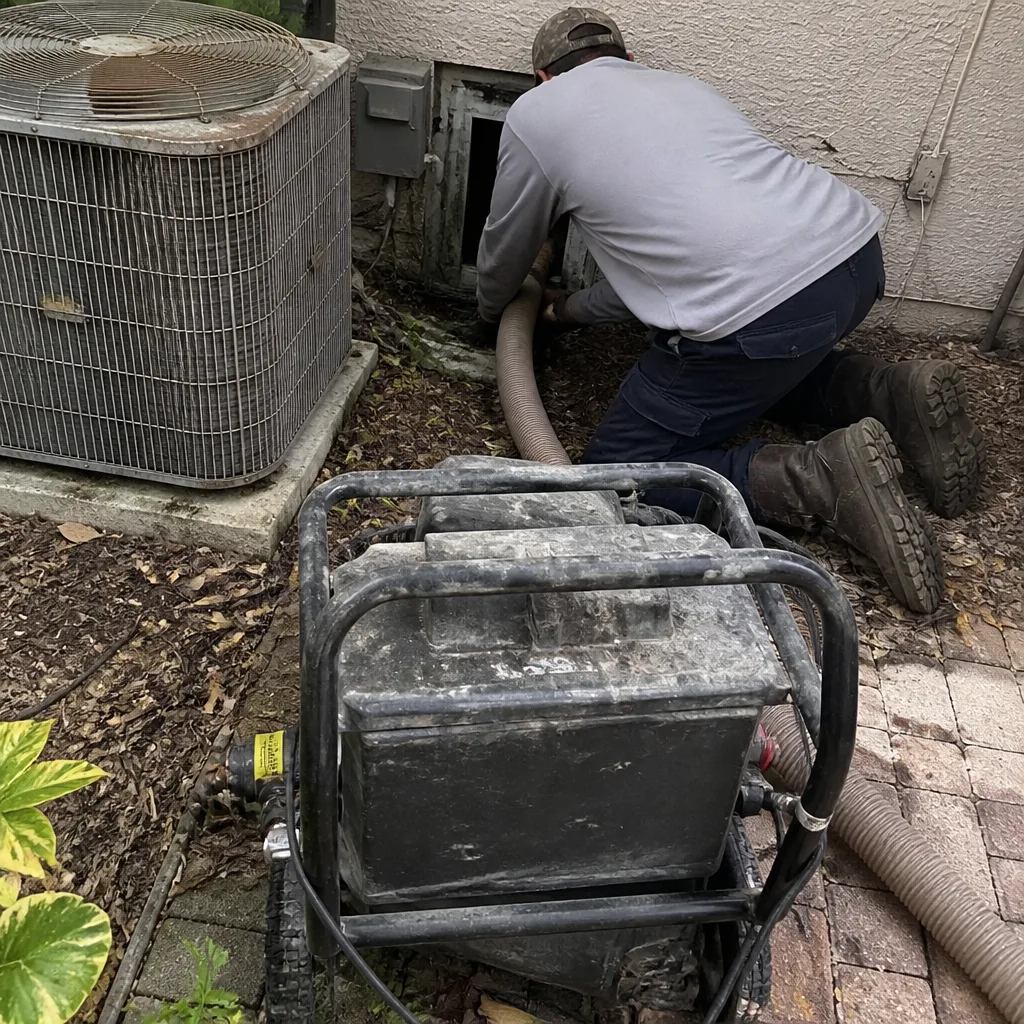 Before
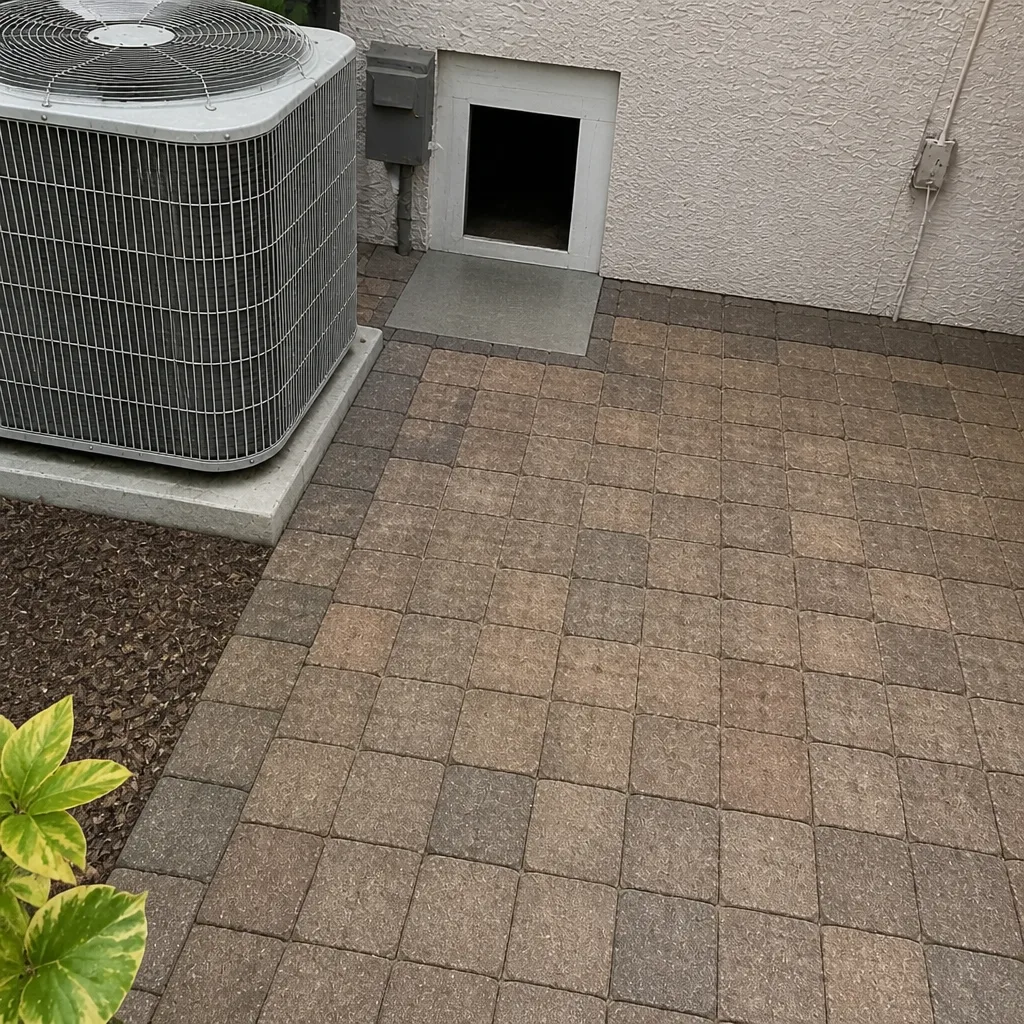 After
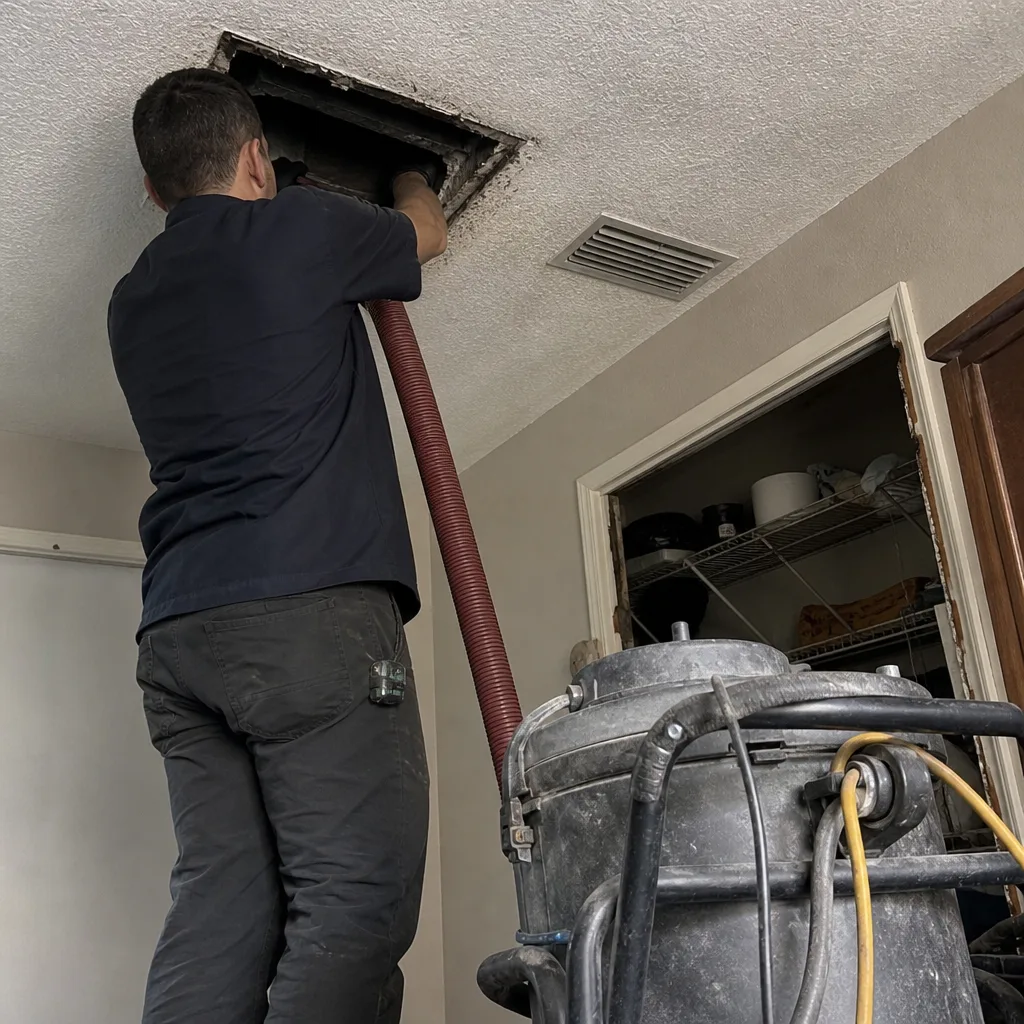 Before
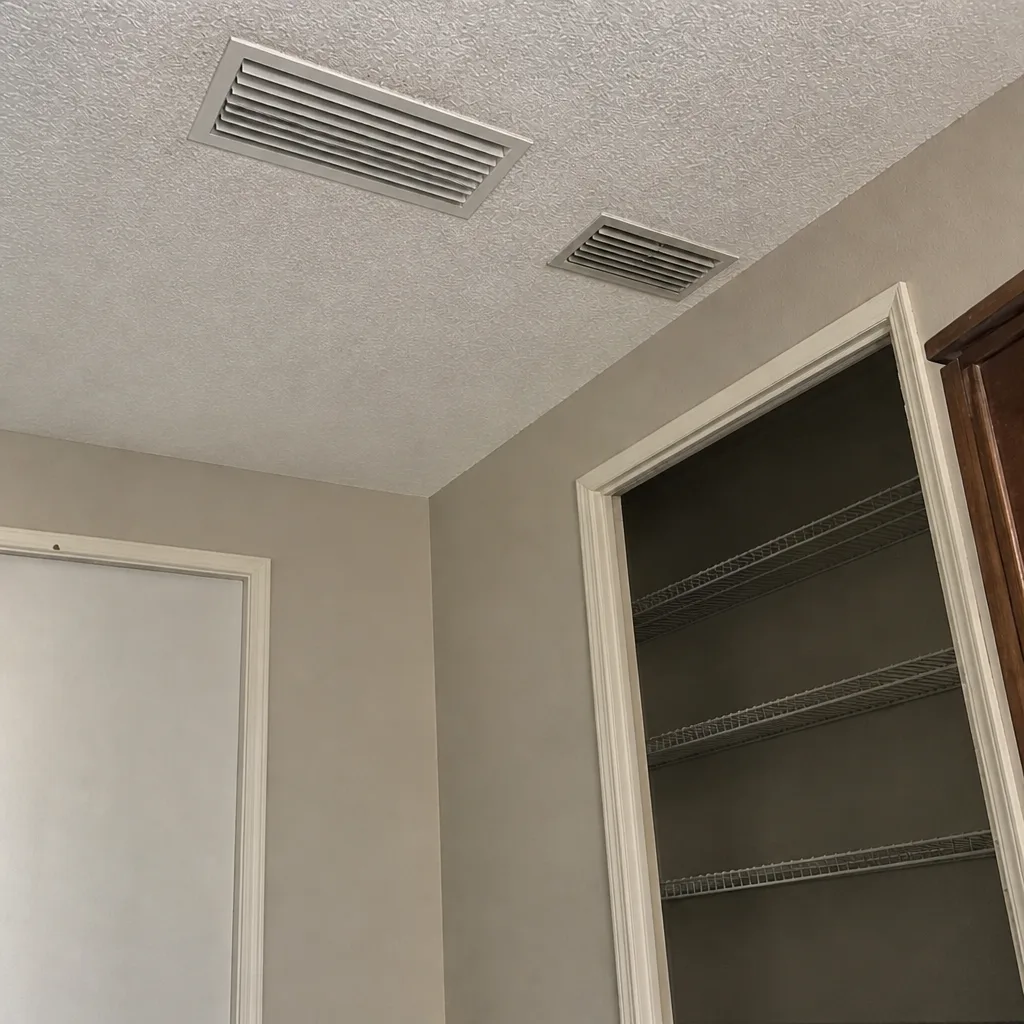 After
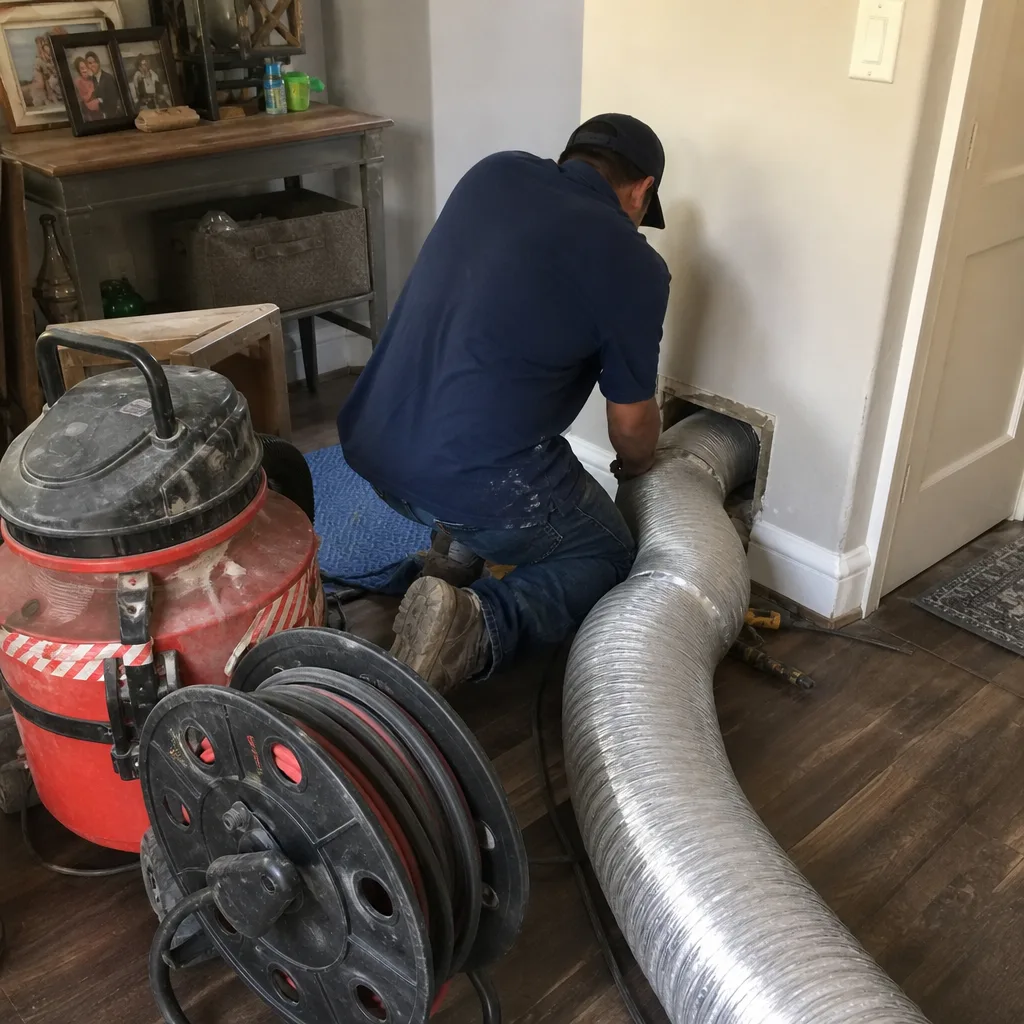 Before
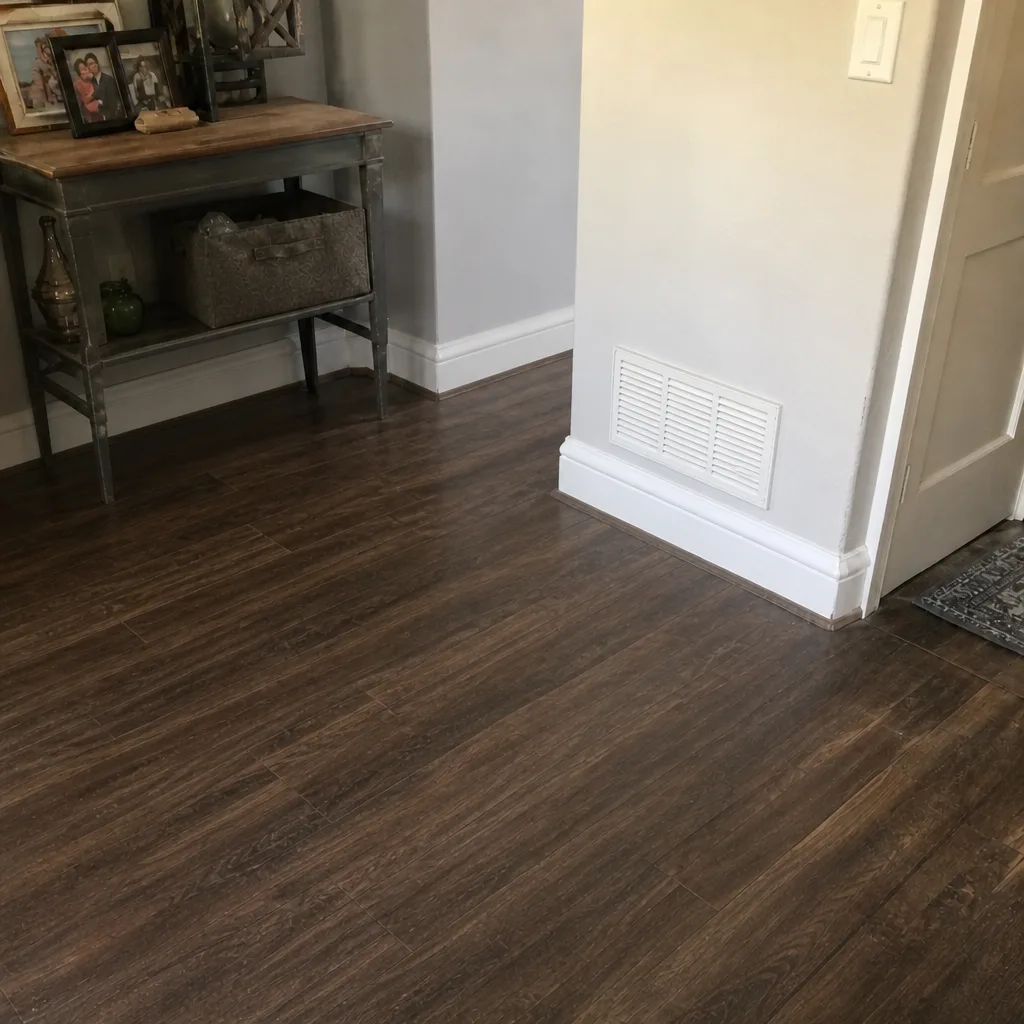 After
When to Call a Professional
Some signs point clearly to a professional cleaning.
Call if you’ve noticed a musty smell that returns after every “cleaning,” if your registers show dust streaks, if you’re renovating a Coral Springs home, or if your energy bills are creeping up with no obvious cause. Call if someone in the household has allergies that seem worse indoors. Call if you’ve never had your system opened and looked at, or if you’re not sure you have. Call any time a crew has cleaned the vents but left without opening the air handler – because in that case, the ducts are probably dirty again already.
Harborview Air Duct Cleaning offers free estimates in Coral Springs – call (844) 761-5395. We’ll look at your system and tell you honestly what’s needed.
Frequently Asked Questions
Pricing depends on system size, number of runs, and whether the air handler and duct repair are included. Rather than quote a teaser number, we give one flat price per system agreed before any work starts, and the written estimate sets the final price. Call (844) 761-5395 for an exact quote – estimates are free.
Cheaper quotes usually exclude the air handler – the coil, blower, and drain pan – which is where most of the dirt and all of the moisture live. That means the ducts look clean for a few weeks and then recontaminate. The price difference buys the steps that make a cleaning last. Call (844) 761-5395 and we’ll walk you through what’s included.
Yes. We repair ductwork as part of the cleaning when we find compromised runs, loose joints, or disconnected takeoffs. Cleaning around a known repair problem and coming back later means paying twice for the same area. Call (844) 761-5395 and we’ll assess everything in one visit.
Our tools are the same platform commercial contractors use – Rotobrush rotary brush systems and Nikro vacuum systems, with Abatement Technologies equipment for contaminant control. Homeowners in Coral Springs get professional-grade equipment, residential care. Call (844) 761-5395 for details on the setup.
Because the AC runs nearly year-round, buildup happens more quickly here than in climates with cold winters. Most homeowners who want to maintain system cleanliness schedule a cleaning every few years, with earlier cleanings triggered by renovations, pets, visible dust, or a musty smell returning. Call (844) 761-5395 and we’ll give an honest assessment of your system.
Source-removal cleaning physically brushes debris from duct walls while a high-powered vacuum holds the system under negative pressure, so loosened material is captured rather than pushed into your home. Blow-and-go skips mechanical agitation and usually skips the air handler, leaving surface debris in place. Call (844) 761-5395 to see the equipment we use.
The Bottom Line
The cleaning that matters in Coral Springs addresses the whole system – ducts, coil, blower, drain pan, grilles, and any repair needs discovered along the way. Cleaning the ducts alone, especially in this climate, just resets the clock on the problem. Verify the equipment on-site, insist on photos before and after, and ask any contractor whether they open the air handler. If the answer is no, you’re getting a partial cleaning. If you’d like a straight assessment of your own system, call (844) 761-5395. We answer 24/7. We also serve nearby Lauderhill and can help you decide what your ducts really need.
Written by the team at Harborview Air Duct Cleaning.