
Last updated November 15, 2026
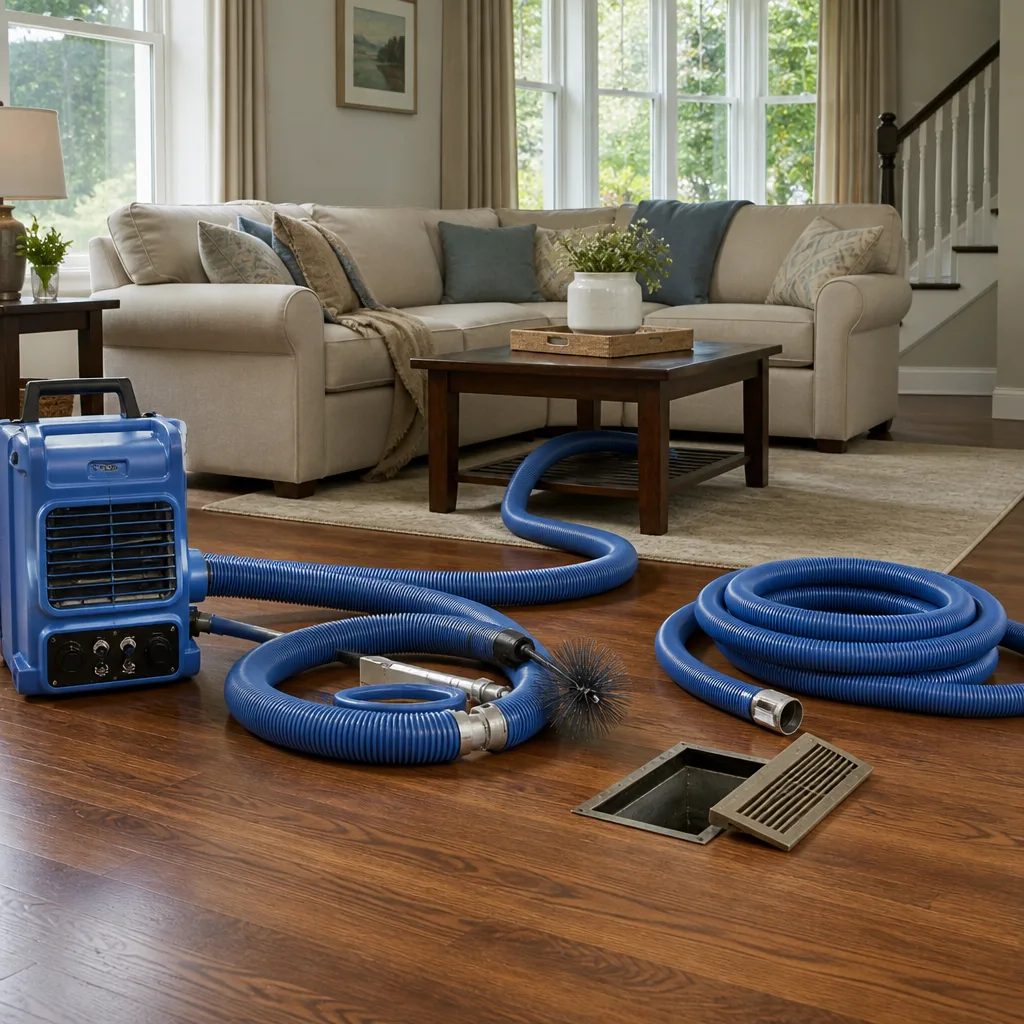 Whole-home duct cleaning
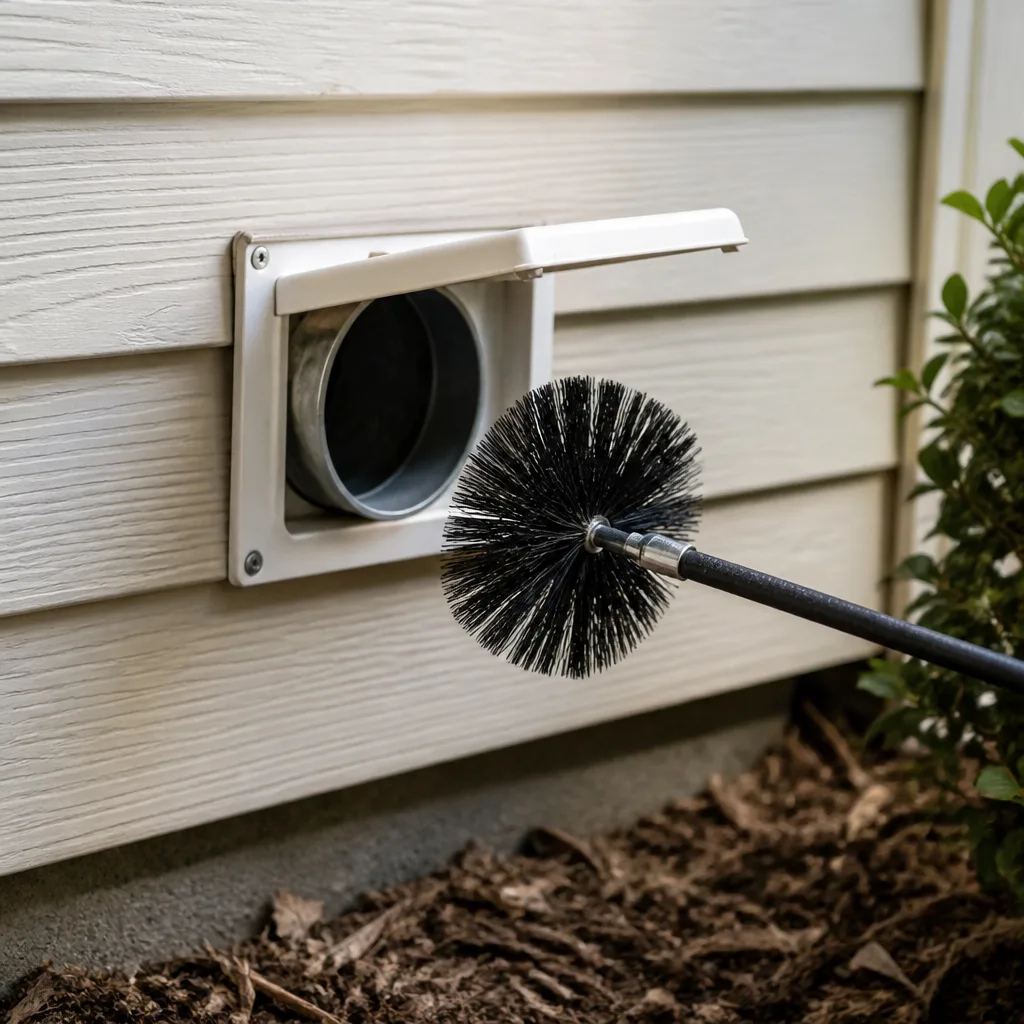 Dryer vent cleaning
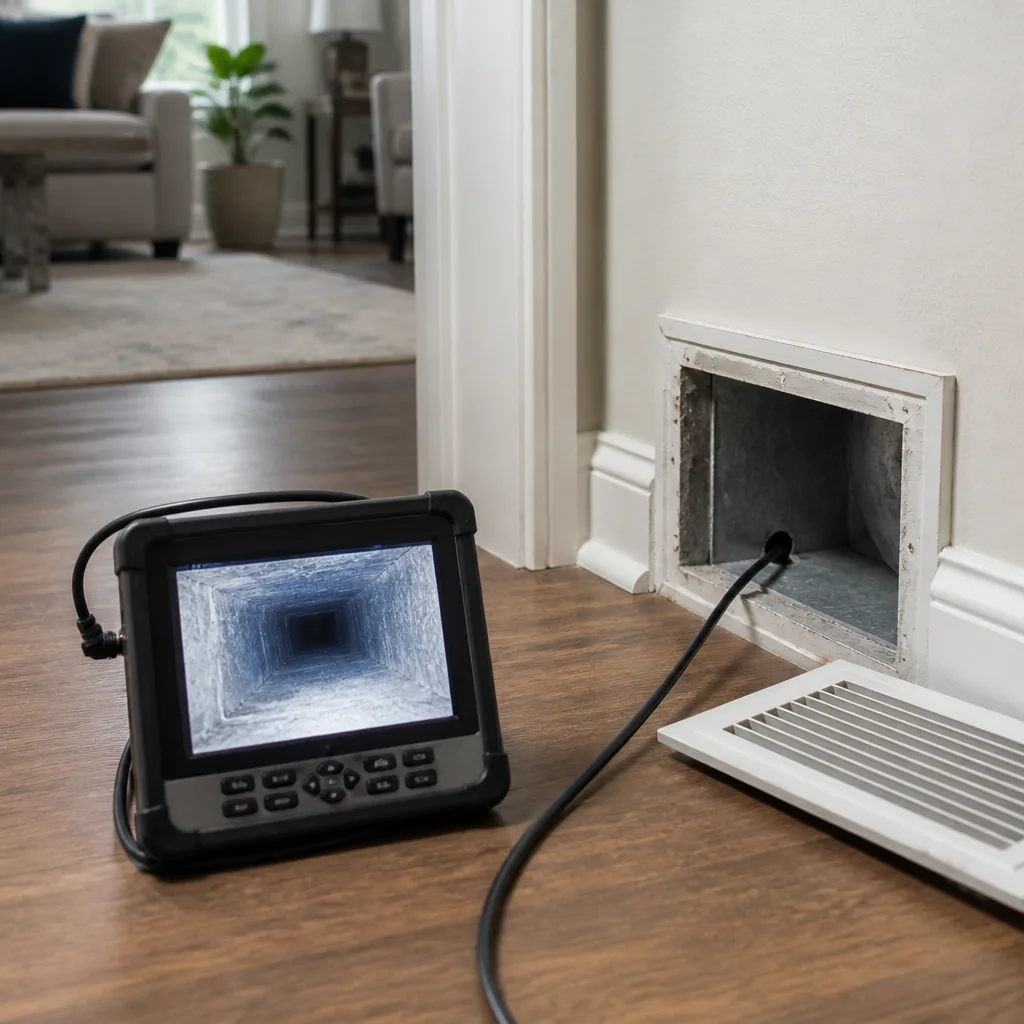 Camera inspection
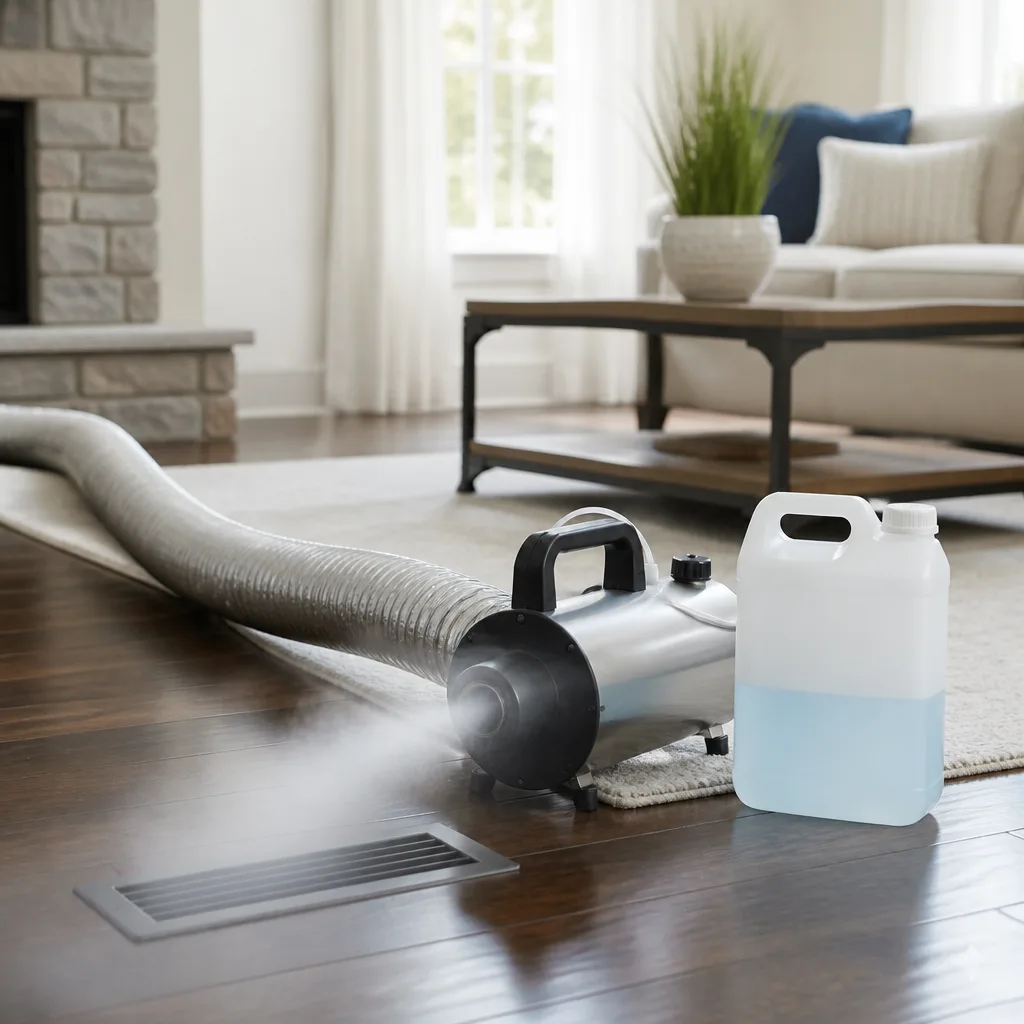 Sanitizing & deodorizing
Whole-system duct and dryer vent check with before-and-after photos - you see exactly what came out of your vents
That "$99 whole-house special" is a bait ad - the real number appears once they are in your hallway, or the "clean" is a shop-vac at the register. We photograph the inside of your ducts before and after instead.
Air Duct Cleaning Permits, Codes & Inspections in Coral Springs, FL: What You Need to Know
Most homeowners assume duct cleaning is duct cleaning and that no rules apply. That’s close to true, and that’s exactly where people get into trouble. Cleaning the inside of ductwork isn’t a permitted activity in Florida. But the moment a contractor cuts an access panel into your plenum, reconnects a trunk line, or seals a joint with mastic, the job crosses into regulated mechanical work. Few homeowners know where that line sits, and honestly, not every contractor does either. This guide walks through what Florida Building Code Section 603 actually governs, how Broward County and Coral Springs oversight layer together, and what to document so that a future inspection or insurance claim doesn’t become a problem you have to solve on your own.
Quick Answer
Routine air duct cleaning does not require a permit in Coral Springs. Any modification to the duct system itself, though, including new access panels, duct replacement, plenum changes, or reconnecting runs, falls under Florida Building Code Section 603 and typically requires a mechanical permit through Broward County, with Coral Springs municipal review layered on top for certain work. Ask for the permit pull in writing before work starts, and verify the contractor’s Florida HVAC license class before anyone touches your ductwork.
Styles & brands we work with
- Whole-home duct cleaning
- Dryer vent cleaning
- Camera inspection
- Sanitizing & deodorizing
Table of Contents
- What Florida Building Code Section 603 Actually Governs
- Cleaning vs. Modification: Where the Permit Line Falls
- How Broward County and Coral Springs Permit Rules Stack
- When Sealing or Replacement Gets Recommended (And Why It Changes Licensing)
- How to Verify Your Contractor’s Florida HVAC License
- What to Document Before and After Service
- What a Mechanical Inspection Actually Checks
- Common Mistakes to Avoid
- When to Call a Professional
- Frequently Asked Questions
What Florida Building Code Section 603 Actually Governs
Florida Building Code Section 603 addresses mechanical systems, and the portion relevant to ductwork covers installation, sealing, support, and system integrity. If you read the language closely, it’s not really about whether ducts look clean. It’s about whether the system performs as designed: no leaks beyond accepted thresholds, no disconnected runs dumping air into an attic, no unsupported flex sagging where it shouldn’t, no penetrations that compromise fire separation. In our experience, roughly half of the “duct cleaning” calls we take in Coral Springs turn up at least one integrity issue once we start looking. That matters because cleaning a system with a disconnected boot or a crushed trunk is like wiping a counter with the faucet running.
The code section itself covers:
- Duct sealing requirements at joints, seams, and connections
- Support intervals and material specifications for flex and hard duct
- Insulation requirements for ducts running through unconditioned space
- Access panel requirements for inspection and cleaning of interior surfaces
- Penetration sealing where ducts pass through rated assemblies
Here’s the important distinction for Coral Springs homeowners. Section 603 governs how ductwork must be installed and maintained. It doesn’t automatically require a permit for every action performed on a duct system. But it does establish what “compliant” means, and inspectors evaluate repair work against it. When a contractor tells you the code “doesn’t apply to cleaning,” that’s technically correct and practically misleading. The code applies to the system, and cleaning interacts with the system. Read the full picture before signing anything. For the cleaning scope itself, our air duct cleaning page covers what a professional-grade whole-system job involves, from rotary agitation to sealed containment.
Cleaning vs. Modification: Where the Permit Line Falls
The clean answer is: cleaning inside the duct doesn’t require a permit; modifying the duct does. That sentence is easy. Applying it to a real job in Coral Springs is where contractors and homeowners both get confused. Here’s the practical split.
Work that typically doesn’t require a permit
- Source removal cleaning of interior duct surfaces
- Vacuum extraction and rotary brushing of existing duct runs
- Cleaning of registers, grilles, and return air drops
- Replacing filters and filter grilles
- Dryer vent cleaning (subject to separate rules about vent termination)
Work that typically does require a mechanical permit
- Cutting new access panels into rigid duct trunks or the plenum
- Removing and replacing any section of ductwork
- Reconnecting disconnected duct runs or adding a new branch
- Relocating a register or adding a return
- Mechanical sealing of significant leaks with mastic or aerosol systems when part of a system alteration
- Any change to the plenum box, plenum connections, or air handler interface
That middle group is where litigation and insurance headaches live. A homeowner asks for “one access panel so the tech can reach the trunk,” and the contractor cuts it into a plenum without pulling a permit. The work is functional. The work might even be good. But it’s unpermitted mechanical alteration, and when the house sells or an insurance adjuster reviews a claim, the paper trail tells a story nobody wants. Coral Springs has thousands of homes built in the 1980s and 1990s with original ductwork, and those systems attract this kind of shortcut. We’ve walked into plenty of them and found two access panels nobody can explain.
If you’re uncertain whether the work in front of you crosses the permit line, call the city first. Building department staff will tell you in under five minutes whether a permit is required.
How Broward County and Coral Springs Permit Rules Stack
A very common source of confusion is that Florida permits for mechanical work get handled at more than one layer. Broward County administers building code for parts of its jurisdiction, and Coral Springs operates its own building department with its own submission and inspection process. The municipality governs permit issuance for work inside city limits, while county and state code provide the standard that inspections evaluate against. In practice, this means a Coral Springs homeowner hiring a contractor should ask two questions, not one.
- Will this specific task require a permit in Coral Springs? The answer depends on scope, not brand loyalty to the code. Cleaning alone: no. Modification: almost always yes.
- Who is pulling it? The contractor whose name appears on the permit should be the contractor performing the work. If a subcontractor pulls it under a different company name, that’s a red flag.
Coral Springs requires permits to be posted at the job site, and inspections must be called in at defined stages. Failure to call for inspection triggers a stop-work order. Not a stern talking to; a stop-work order. If a contractor offers to “handle the paperwork later,” that’s a contractor who plans not to handle the paperwork. And the consequences don’t just land on them. Unpermitted work that gets discovered later (at sale, at insurance review, at refinance appraisal) can require the homeowner to retroactively permit and inspect the work, sometimes after the original contractor has moved on.
The environmental context matters too. Coral Springs sits well inland in Broward County, which means mild winters, high humidity much of the year, and duct systems that see an enormous volume of cooling-hours. Condensation and biological growth on interior duct surfaces is a real issue here in a way it isn’t in drier climates. That doesn’t change the permit rules, but it does mean the “when should I act” threshold is lower than it would be elsewhere. If you’re near Lauderhill and want the same guidance applied to that area, our Lauderhill page walks through local conditions and service scope.
When Sealing or Replacement Gets Recommended (And Why It Changes Licensing)
Half the value of a real duct cleaning is what shows up while the equipment is running. Once a Rotobrush rotary head has been pulled through a trunk and the camera showed what came out, honest contractors find things: failed mastic, disconnected boots, crushed flex in tight chases, insulation delaminating on the inside of the duct, mold growth where condensation has been pooling. Not every finding requires action. Some findings change the job from a cleaning to a repair, and that change is where licensing and permits both shift.
The right way to think about it:
- Sealing small joint leaks with mastic is usually minor and typically handled as part of the cleaning visit. No permit if the system isn’t being altered.
- Sealing a significant portion of the system with a spray-applied or registered sealant can count as an alteration, and it may require both a permit and a contractor with the right license class.
- Replacing duct sections is new mechanical work. Permit required. Contractor license class matters.
- Adding return air capacity or redesigning a trunk is design-level work, usually requiring a permit and often a licensed mechanical contractor.
Here’s why this matters to you as a homeowner: the upsell is legitimate only when the work it moves you to is done right. That means the same contractor who cleans can also handle the repair, and holds the license to do it legally. Harborview performs air duct repair alongside cleaning for exactly this reason. We’d rather diagnose a disconnected trunk during the cleaning visit and fix it on the same trip than clean around a problem the customer will pay for again in eighteen months. Guardsman-line finish products fit here too; a proper seal-and-protect step is part of what we consider the job being done, not an optional add-on. Understand that “clean ducts, confirmed” is a standard, not a slogan.
If the recommended repair crosses into a permit-required scope, a contractor who says “we don’t need a permit for that” is telling you something. Believe them the first time.
How to Verify Your Contractor’s Florida HVAC License
Florida licenses mechanical contractors through the Department of Business and Professional Regulation, and the license classes you’ll actually encounter fall into a few categories. Class A mechanical contractors can perform any mechanical work. Class B mechanical contractors can perform mechanical work up to a defined project value threshold. Certified and registered contractors both exist, but the state database will tell you which one you’re looking at. A general contractor license does not authorize mechanical work, and a duct cleaning company operating without an HVAC license cannot legally perform duct modifications.
Here’s the verification sequence, and you should run all of it:
- Ask for the license number in writing before scheduling. Any hesitation is a stop sign.
- Search the number on the DBPR website. Confirm the name matches the company on the estimate, not a different entity.
- Confirm license class. If your job involves modification, you want Class A or Class B mechanical.
- Ask about insurance. General liability and workers’ comp, both current. Request a certificate of insurance naming you as the property owner.
- Ask who is pulling the permit. The licensed contractor should be the one on the permit application.
- Watch for subcontractors. If a crew shows up whose company name is nowhere on your paperwork, ask why.
In our experience, the biggest problem in this trade isn’t outright fraud. It’s the gray zone: a cleaning company that brings in an unlicensed helper for a duct repair, or an HVAC contractor who subcontracts cleaning to an outside crew. When something goes wrong, the paperwork trail leads somewhere unexpected. Verify upfront and you never have to untangle it later. For a sense of what professional-grade equipment actually looks like in practice (Rotobrush and Nikro systems, not entry-level vacuums), our Harborview Air Duct Cleaning overview is the right starting point.
What to Document Before and After Service
Even when no permit is required, documentation matters. Homeowners who keep a simple paper trail have far fewer problems at insurance review, at sale, or if a warranty claim ever surfaces down the line. The documentation habit is easy to build and costs you nothing.
Before the visit
- Photograph the return and supply registers in every room, especially any that look visibly soiled
- Photograph the air handler area and any existing access panels
- Note the date of your last filter change and the filter size
- Record the manufacturer’s model number of your HVAC system
- Note what you’re planning to have done, in your own words, and email it to the contractor
After the visit
- Request before-and-after photos of your own ducts, not a stock photo portfolio
- Keep the written estimate and final invoice in the same folder as your HVAC records
- If a permit was pulled, keep the permit number and the inspection results
- Ask for a written summary of any condition issues observed but not addressed
- Note the date, the technician names, and the equipment used, so a future service call can pick up from a known point
This is a genuinely useful habit for any Coral Springs homeowner, not just after duct work. Duct systems here run heavily during the cooling season and often sit through long humid stretches; a documented baseline lets you spot change over time instead of guessing. And for insurance purposes, the before-and-after photos of your own system are what matter, not a marketing page showing somebody else’s ducts. That’s a policy we hold at Harborview, and it’s a question worth asking of any contractor you hire.
What a Mechanical Inspection Actually Checks
If a permit was pulled for duct modification, an inspection will follow. Understanding what gets inspected takes the mystery out of the process.
- Support and connection integrity: duct is supported at specified intervals, connected properly to boots and plenum, and not sagging or crushed
- Sealing: joints and seams meet the leakage standard specified for the system type
- Insulation: properly installed on ducts running through unconditioned space, including attic runs common in Coral Springs homes
- Access panels: installed correctly, sealed after use, and located where cleaning and inspection can actually happen
- Fire-blocking: penetrations through fire-rated assemblies are properly sealed
- Return air integrity: no return pulling from an attic, garage, or other prohibited source
A failed inspection is usually smaller than people fear. Missing mastic at a joint, a flex run without proper support, an unsealed penetration. The correction is straightforward when the contractor who did the work is licensed and responsible. It gets expensive and awkward when the contractor wasn’t licensed to do the work in the first place. Ask for the inspection result in writing when the job closes. It’s your property, and the file should be complete.
See the difference
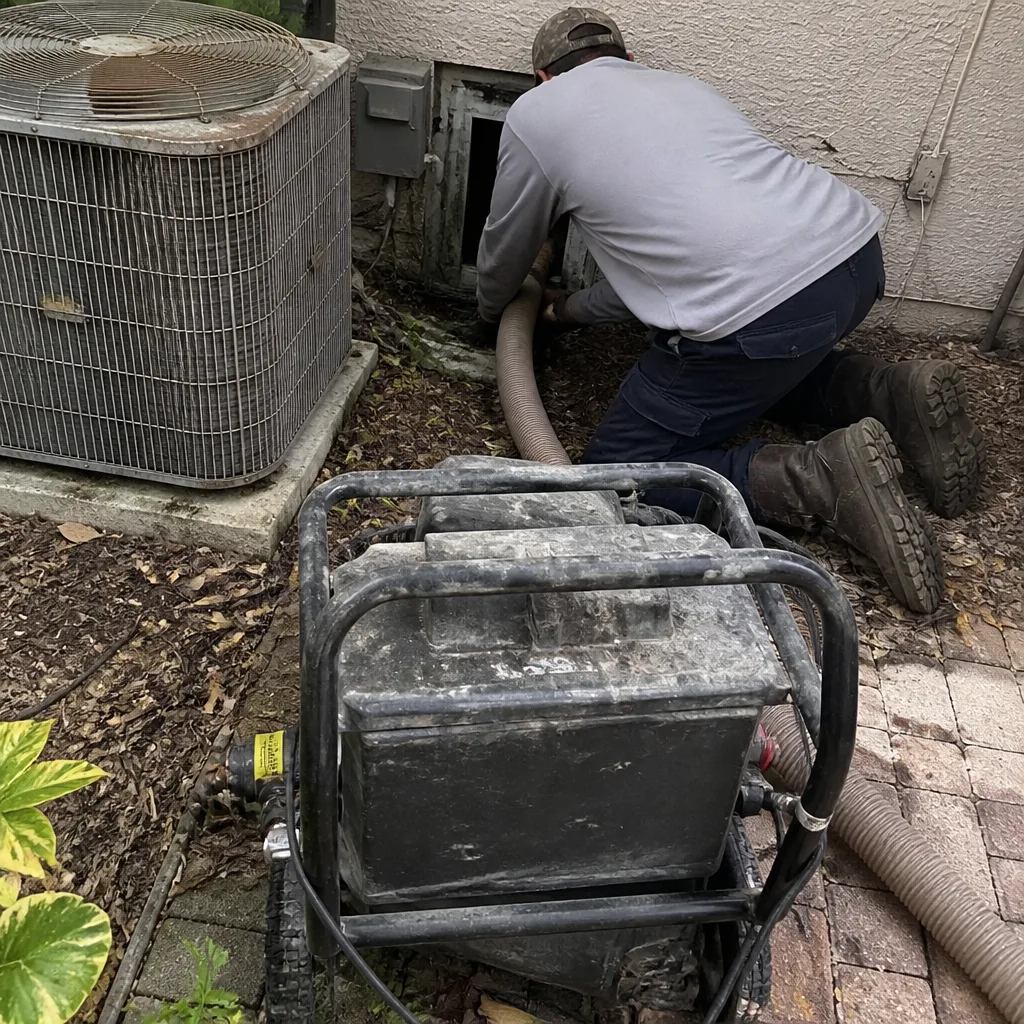 Before
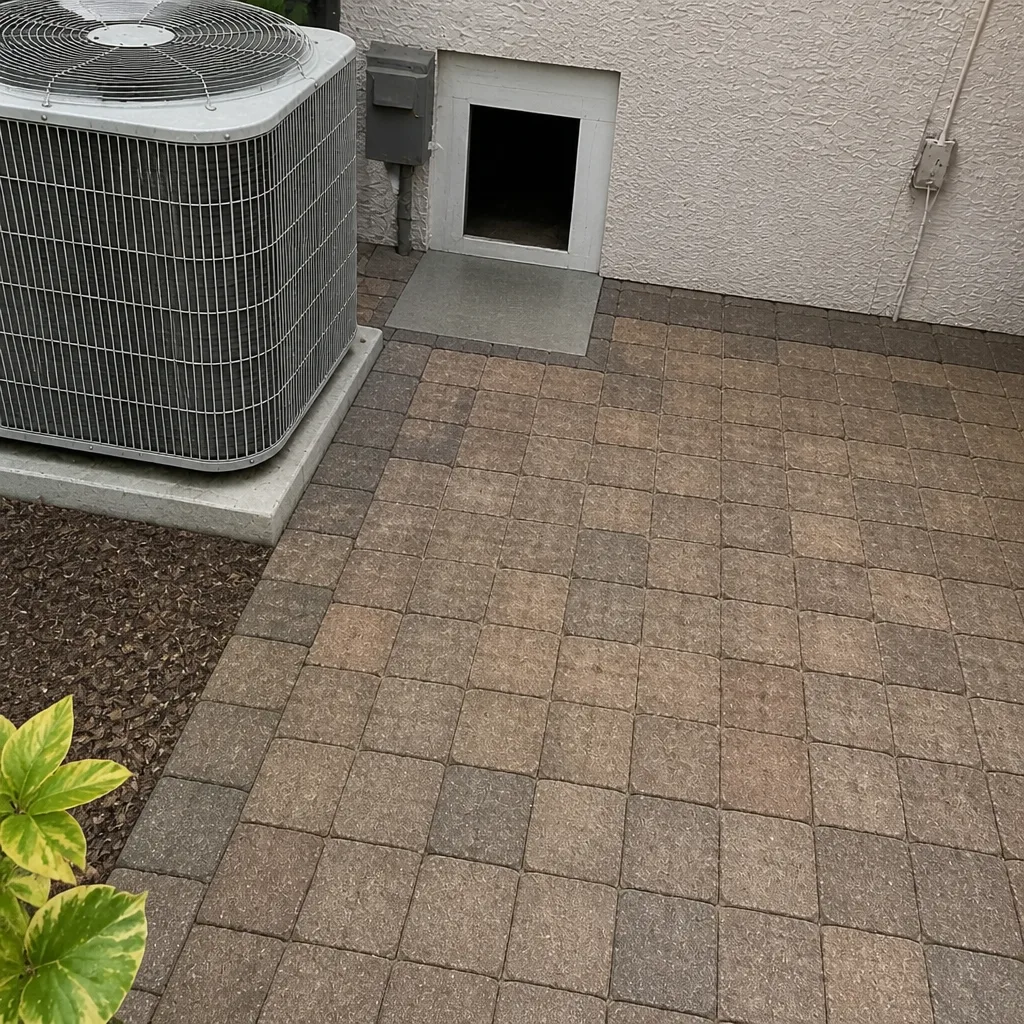 After
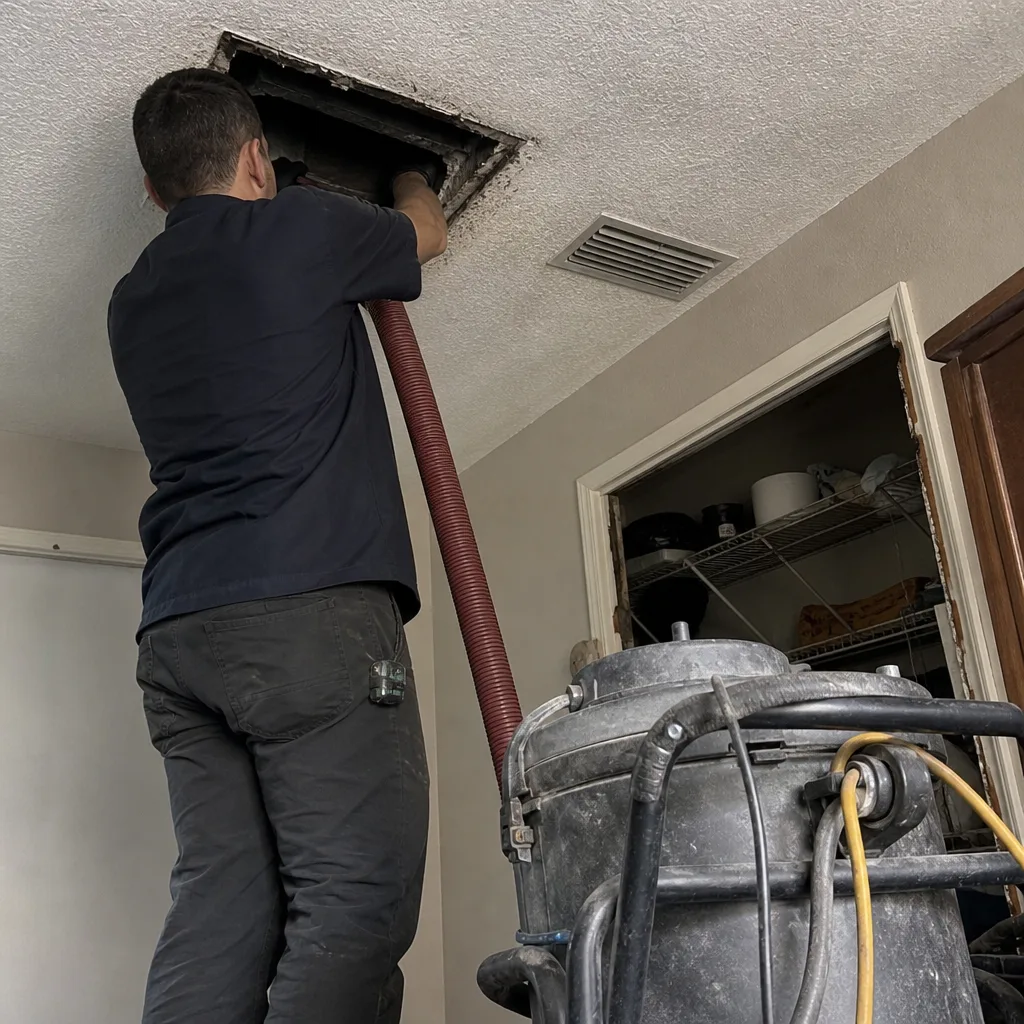 Before
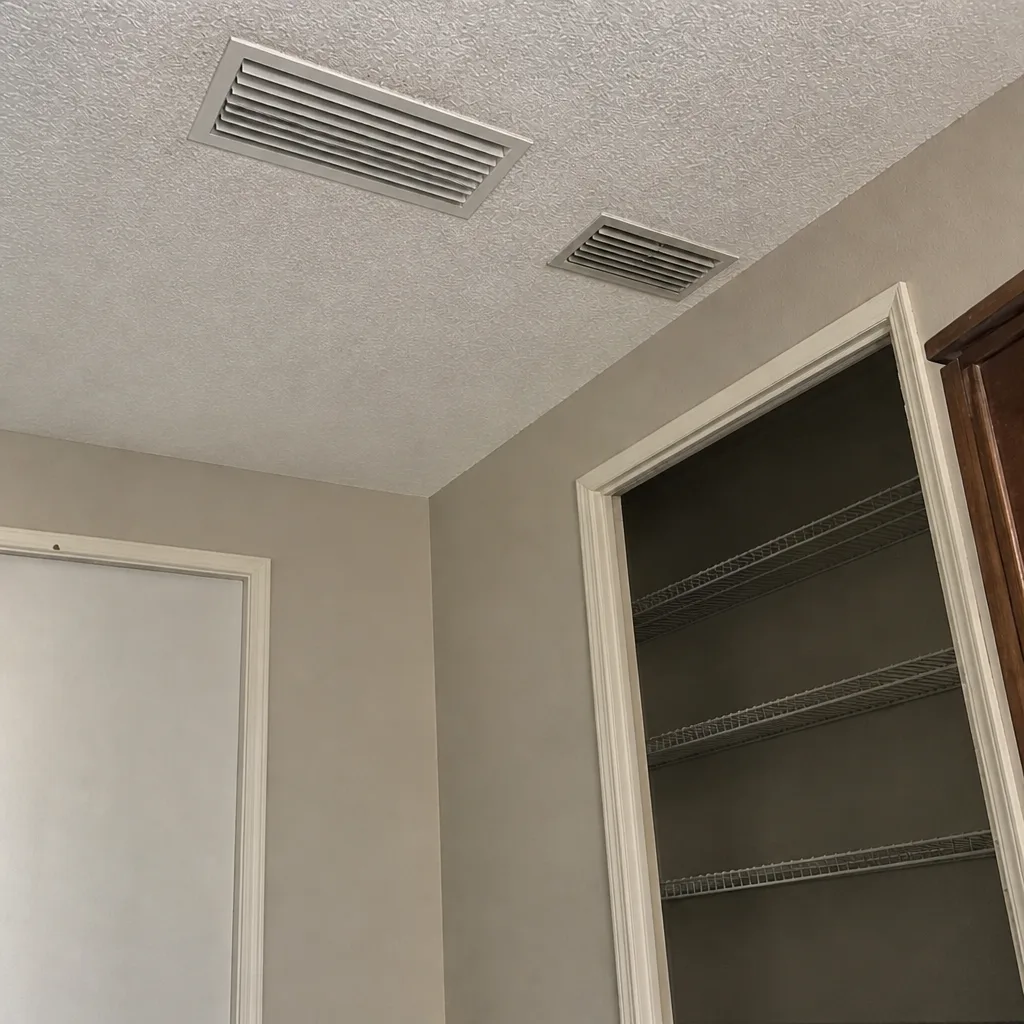 After
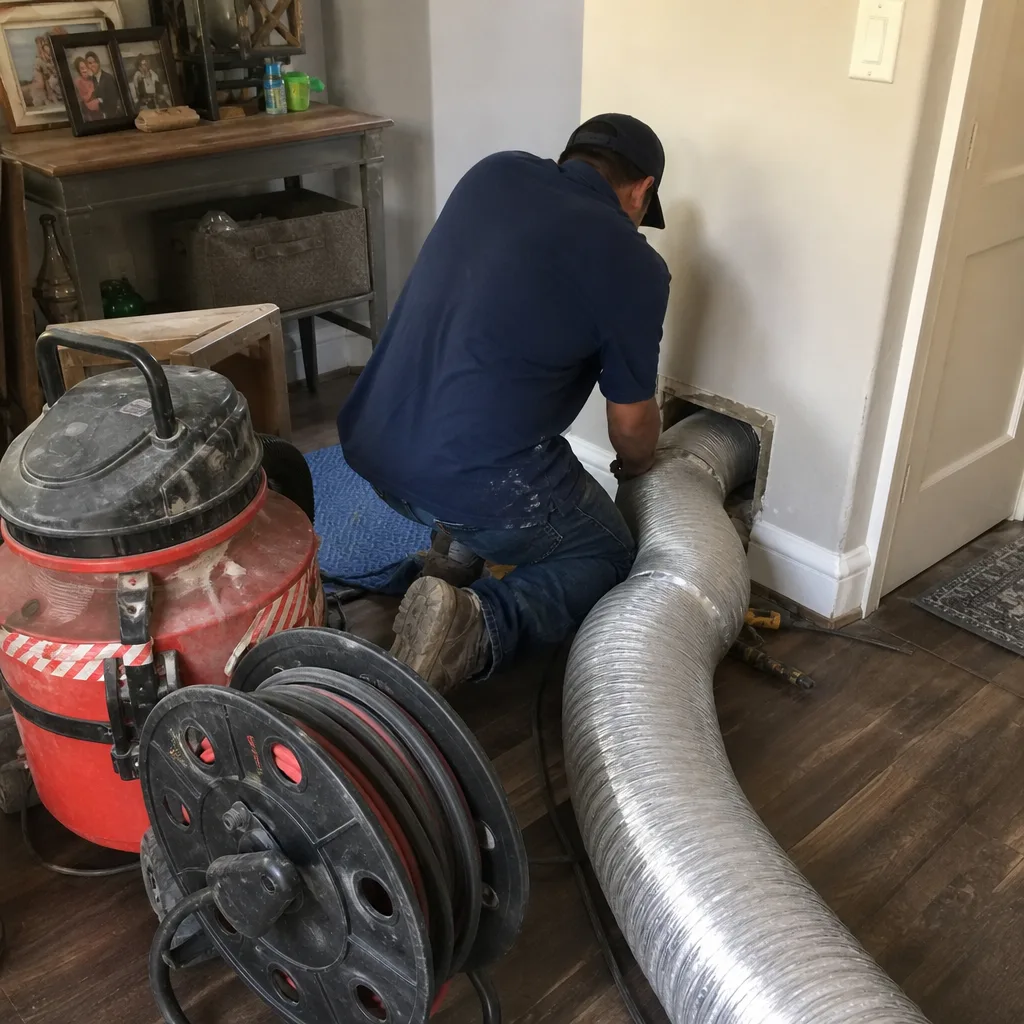 Before
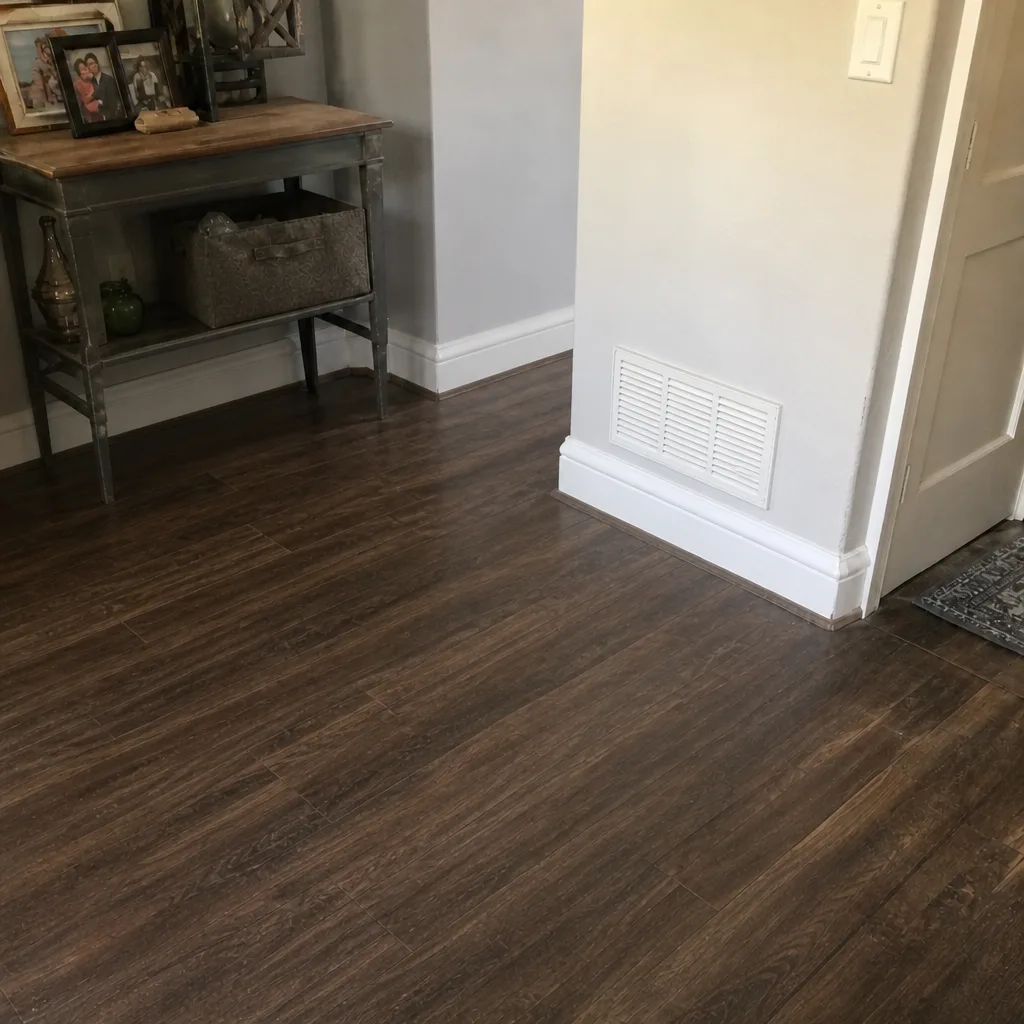 After
Common Mistakes to Avoid
- Assuming “cleaning” covers any work performed during the visit. Cleaning is one thing; cutting a new access panel is another. Make sure the scope in writing matches what’s actually happening to your system, and ask if a permit is required for any non-cleaning item.
- Skipping the license check because the crew was friendly. Friendliness doesn’t equal licensure. Run the DBPR lookup before the appointment, not after. It takes about three minutes in Coral Springs and saves weeks of heartache.
- Letting a cleaning-only company upsell you into duct repairs. Their license may not cover it. If the recommendation crosses into modification, confirm the license class before agreeing.
- Not documenting before-and-after. Without photos of your own system, you have no way to confirm the work happened or to justify it later if it comes up at sale or insurance.
- Accepting a per-vent price as the whole job. A per-vent quote is a teaser. The real number is the whole-system scope, and it should be agreed in writing before anyone starts.
- Ignoring the humidity angle. Coral Springs is high-humidity most of the year. Condensation on interior duct surfaces is a diagnostic finding, not just cosmetic. If the cleaning crew ignores it, the cleaning isn’t complete.
- Hiring a general contractor for mechanical work. A GC license doesn’t authorize duct modification. If your contractor’s license doesn’t list mechanical, they can’t legally pull the mechanical permit for the work.
- Not asking about access panel placement. A poorly placed panel can leak air, disrupt insulation, or fail to be accessible for future cleaning. Ask where the panel will go and why.
When to Call a Professional
Some cleaning is a maintenance item; some is a callback waiting to happen. Call a professional if you notice visible dust streaks around the return grille, a musty smell that returns within days of a filter change, or a room that never cools the way it used to. If you’ve recently completed a renovation in Coral Springs, drywall dust and construction debris settle into ductwork in ways a consumer vacuum can’t reach, and that’s a source-removal job, not a filter swap. Any duct that looked wet, is sagging, or feels cold but blows weakly warrants attention, and so does any home where ductwork predates a major HVAC replacement. If you’re scheduling dryer vent cleaning as part of a broader air quality pass, that’s also the right time to have the supply system assessed. Harborview Air Duct Cleaning offers free estimates in Coral Springs, and we can work with your insurer if a claim enters the conversation. Call (844) 761-5395. We answer 24/7. Fast dispatch from 7am to 7pm, Sunday through Friday.
Frequently Asked Questions
No. Routine source-removal cleaning of interior duct surfaces does not require a permit in Coral Springs. The permit line gets crossed when the work becomes a modification: new access panels, duct replacement, plenum changes, reconnecting runs, or mechanical alterations to the system. Ask specifically about permit requirements for any non-cleaning item in the scope. Call (844) 761-5395 for an exact quote on your cleaning scope.
Yes, always, whether or not a permit is required for the work being done. Section 603 sets the standard for installation, sealing, support, insulation, and system integrity. Inspectors evaluate permitted work against it, and it establishes what “compliant” means for any existing system. Cleaning doesn’t trigger code review on its own, but any modification will be assessed against Section 603. Call (844) 761-5395 with your system details and we’ll walk through what applies.
Class A mechanical contractors can perform any mechanical work in the state. Class B mechanical contractors can perform mechanical work up to a defined project value threshold. Both can legally handle duct modifications within their scope; a general contractor license cannot. Verify the license class on the DBPR website before you hire, and confirm the license number on the estimate matches the company doing the work. Call (844) 761-5395 for a free estimate on duct cleaning or repair.
Whole-system cleaning in Coral Springs typically runs in the range of a few hundred to roughly a thousand dollars depending on system size, accessibility, and condition, and the written estimate sets the final number. We price per system, not per vent, because a per-vent quote almost always grows once the technician is on site. Duct repair is priced separately based on scope. Call (844) 761-5395 for an exact quote; estimates are free.
Cheap quotes usually reflect a narrower scope: fewer vent openings serviced, surface-level vacuuming without rotary agitation, no containment equipment, and no documentation. Some come with a coupon price that balloons once inspection finds “necessary” work. In our experience the honest comparison is whole-system scope with before-and-after photos of your own ducts, agreed in writing before the work begins. Ask what’s actually included and what’s excluded, then compare. Call (844) 761-5395 for a transparent estimate.
Ask for before-and-after photos of your own ducts, not a stock portfolio. When a contractor uses professional Rotobrush equipment with Nikro vacuum capture and documents the cleaning with system-specific images, the work is verifiable. That’s the difference between “clean ducts, confirmed” and a receipt that says the job was done. We provide before-and-after photos as standard practice. Then keep the photos in your home records. Call (844) 761-5395 for a free estimate.
First, don’t panic. Second, contact the Coral Springs building department and describe the work plainly. Many unpermitted modifications can be brought into compliance through a retroactive permit process that includes an inspection. Third, gather the invoice, photos, and any written scope from the original contractor. If the contractor’s license doesn’t cover the work, that’s a separate issue worth understanding. This is exactly why documentation upfront prevents problems later. Call (844) 761-5395 if you want to talk through the repair options.
It generally doesn’t affect your premium, but it can affect a claim. If you ever file an insurance claim related to HVAC or water intrusion, adjusters often want to see documentation of the system’s condition and prior service. Before-and-after photos, invoices, and permit history are all part of that file. Duct repair performed without a permit, on the other hand, can cause claim complications if it’s discovered. We can work with your insurer when questions come up. Call (844) 761-5395 for a free estimate.
The Bottom Line
Cleaning your ducts in Coral Springs doesn’t need a permit. Modifying them almost always does, and the line between those two sits where Florida Building Code Section 603, Broward County mechanical permit thresholds, and Coral Springs municipal oversight meet. Verify the contractor’s license before the visit. Ask whether any non-cleaning item on the proposal requires a permit. Document your system before and after service, and keep those records. Before-and-after photos of your own ducts, a written estimate, and a license lookup are the three things that protect you the most. Judge duct work by the scope, the equipment, and the paper trail, not by the coupon price.
Our technicians have up to 10 years of experience working with Rotobrush, Nikro, and Abatement Technologies equipment, and we handle Honeywell and Aprilaire air-quality systems with the same cross-system perspective we bring to every Coral Springs home. If you’re ready for a straightforward assessment of your whole system, not just your vents, call Harborview Air Duct Cleaning at (844) 761-5395 for a free estimate. We answer 24/7. Fast dispatch from 7am to 7pm, Sunday through Friday. One flat price per system, agreed before the work starts, with before-and-after photos of your own ducts.
Written by the team at Harborview Air Duct Cleaning.