
Last updated November 15, 2026
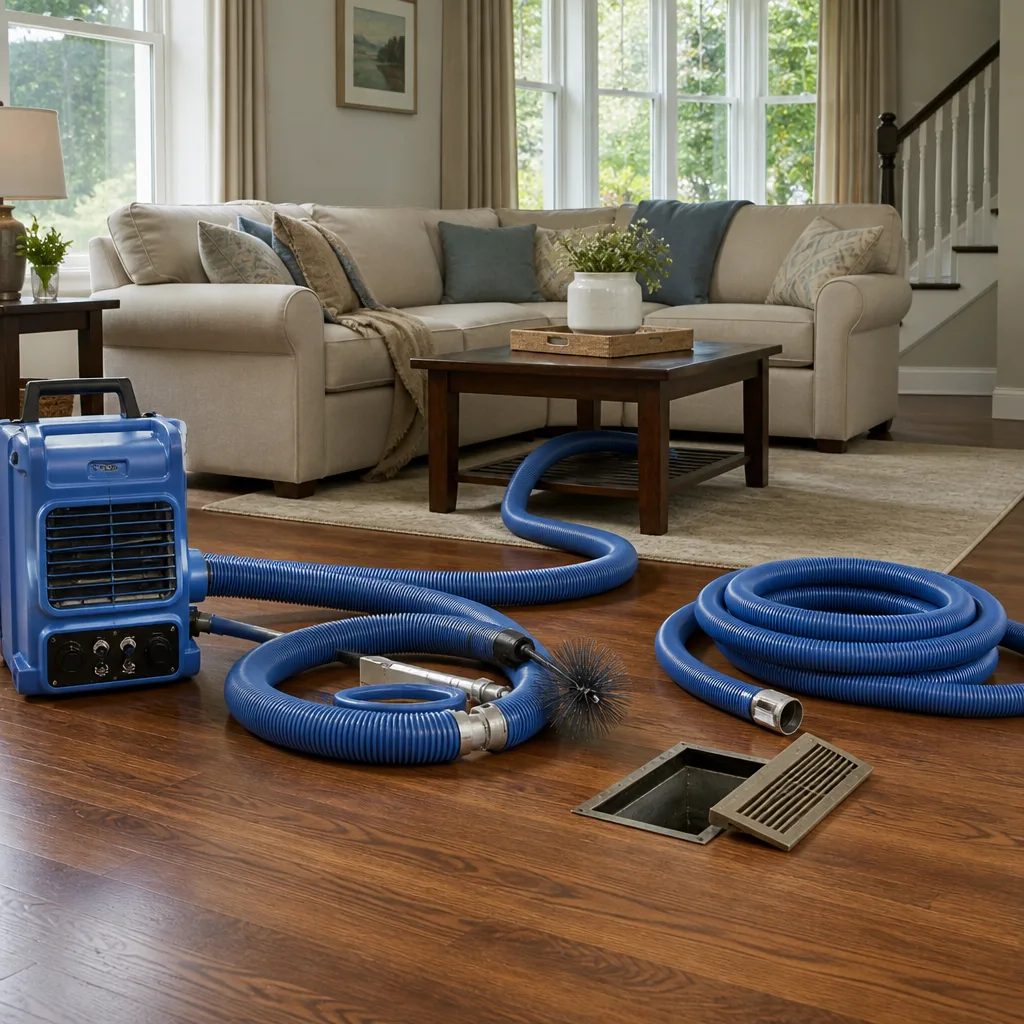 Whole-home duct cleaning
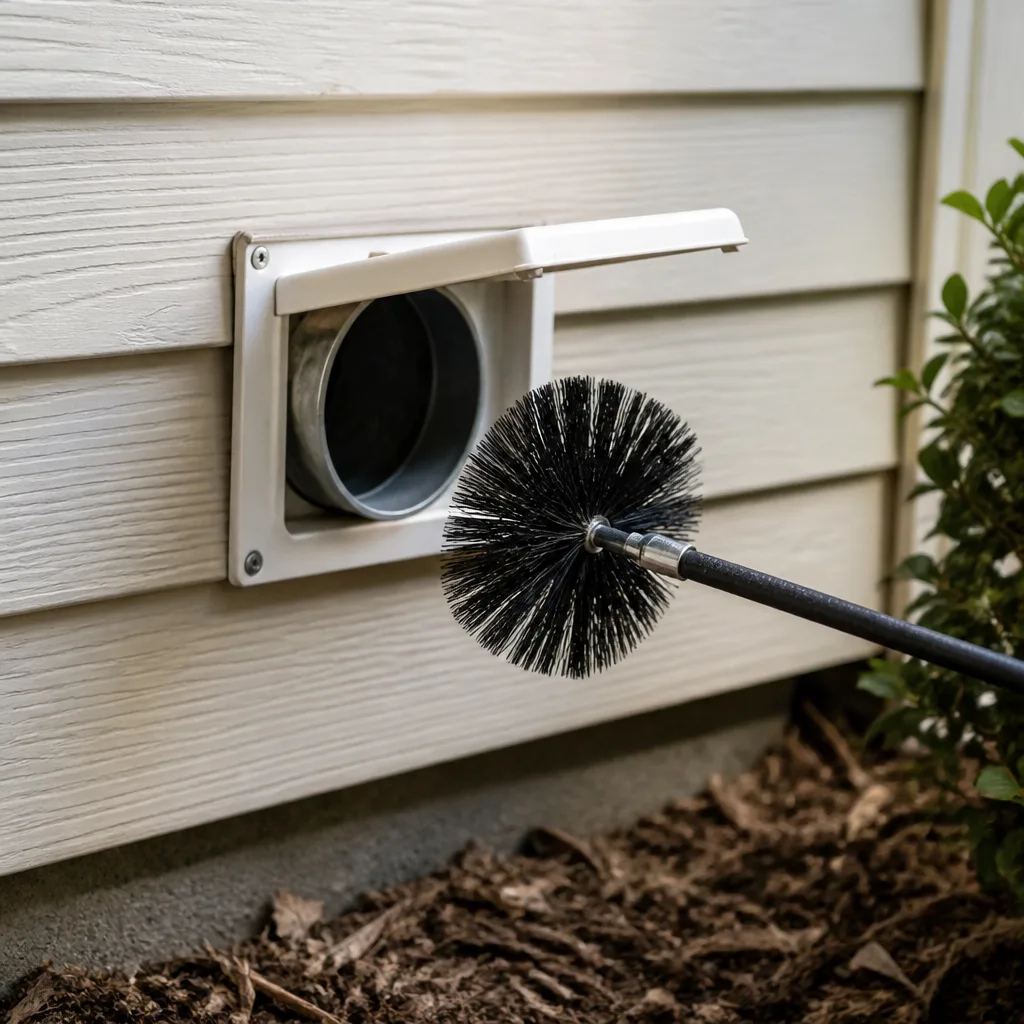 Dryer vent cleaning
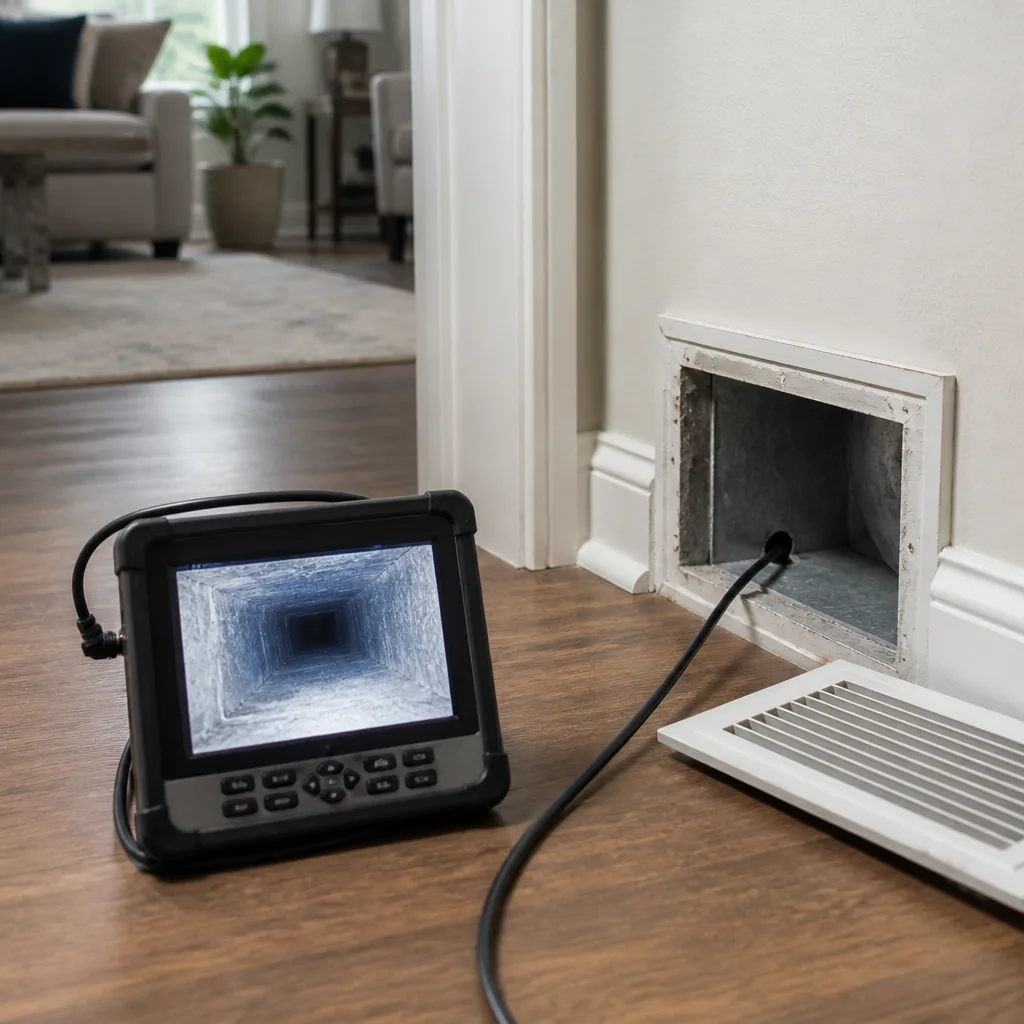 Camera inspection
 Sanitizing & deodorizing
Whole-system duct and dryer vent check with before-and-after photos - you see exactly what came out of your vents
That "$99 whole-house special" is a bait ad - the real number appears once they are in your hallway, or the "clean" is a shop-vac at the register. We photograph the inside of your ducts before and after instead.
Air Duct Cleaning Warning Signs: A Coral Springs Homeowner’s Reference Guide
Most lists of duct cleaning warning signs were written for houses with basements and furnaces, and they don’t translate well to a Coral Springs home running an air handler in the attic almost every month of the year. The signs that actually matter here are quieter: a smell that shows up only at startup, a bedroom that never quite cools, a filter that loads up faster than it should. None of those point automatically at your ducts, and that’s the point of this guide. We’ll walk through how to read each signal, how to separate a duct problem from an air handler problem wearing a duct costume, and when it’s worth having someone look.
Quick Answer
In Coral Springs, the duct problems worth acting on usually show up as one of four things: a musty or dusty smell when the AC starts, uneven room temperatures, filters that clog unusually fast, or visible sagging or disconnected flex duct in the attic. A single sign doesn’t prove your ducts are dirty, and several signs together still need a diagnosis before anyone quotes a cleaning. Read the pattern, not the checklist.
Styles & brands we work with
- Whole-home duct cleaning
- Dryer vent cleaning
- Camera inspection
- Sanitizing & deodorizing
Table of Contents
- Why Florida Duct Symptoms Get Misdiagnosed
- The Warning Signs That Actually Matter in Coral Springs
- Attic Flex Duct: What to Look For
- Uneven Temperatures and Airflow Imbalance
- What Your Filter Is Telling You
- Rising Utility Bills: Ruling Ductwork In or Out
- How a Real Duct Inspection Works
- Common Mistakes to Avoid
Why Florida Duct Symptoms Get Misdiagnosed
A musty smell when the AC kicks on is not always mold in your ducts. In a Coral Springs home it can just as easily be a dirty evaporator coil, a blocked condensate drain line holding standing water, or condensation forming on ductwork because the system is oversized for the house. Each has a different fix, and cleaning the ducts does nothing for two of the three.
That misdiagnosis is the single biggest reason homeowners in Coral Springs spend money in the wrong place. A house that smells musty is being told “your ducts need cleaning” by one contractor and “your coil is dirty” by another, and both might be half right. The honest answer usually comes from looking at the system, not the symptom.
The distinction matters because ducts and air handler are connected but not the same. Ducts carry air. The air handler conditions it, moves it, and drains the moisture it pulls out of the air. A symptom can originate in either. Here’s how they tend to sort out:
- Smell only when the system starts, fades after a minute: often the coil or a damp drain pan releasing a puff of stale air, though a dirty return can do the same.
- Smell that never fades, or is strongest in one room: more likely a duct-side issue, especially a disconnected or torn flex run.
- Musty smell that’s worse on humid days: frequently a condensation problem, not a debris problem.
- Dust that settles heavily right under specific supply vents: a strong sign the duct serving that vent is compromised.
In our experience across Coral Springs, the smell-only-when-it-starts complaint gets blamed on ducts far more often than it should. Before anyone quotes a cleaning, ask what else they checked.
See the difference
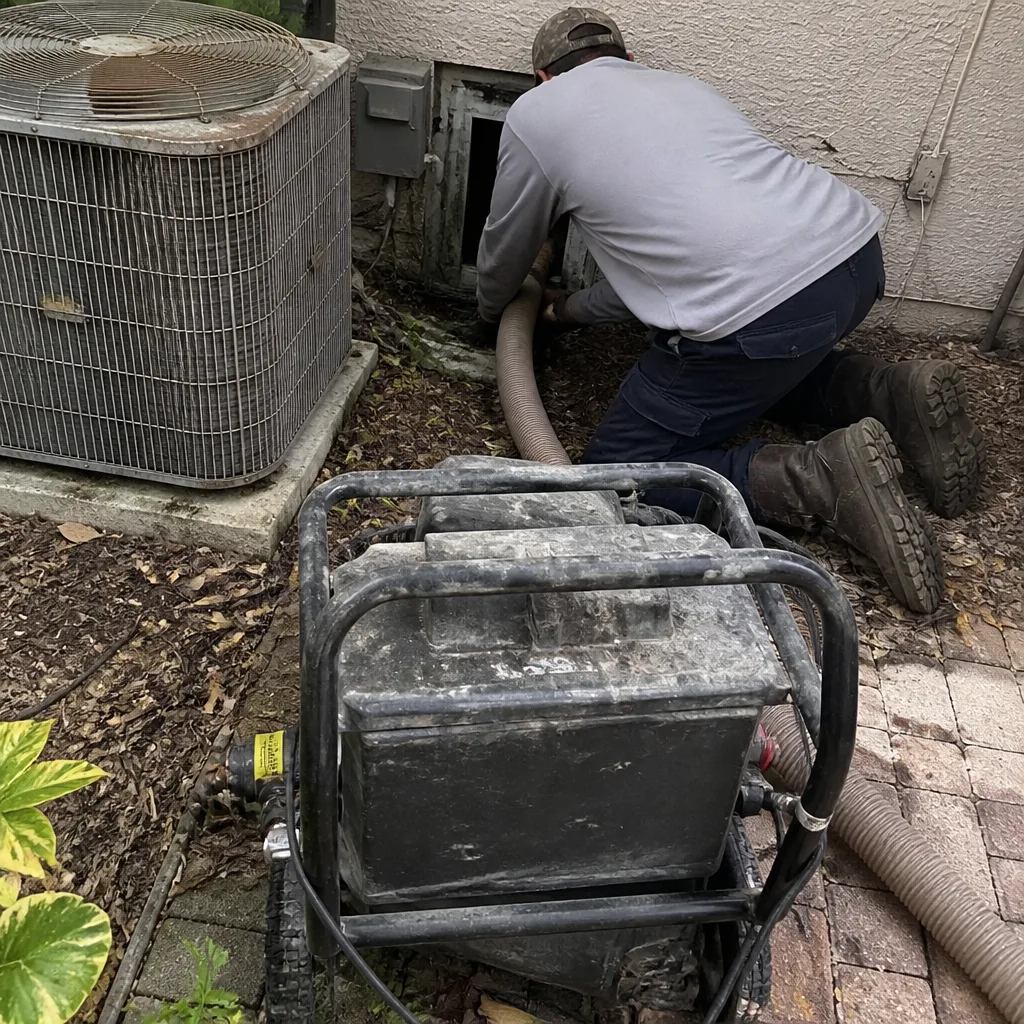 Before
 After
 Before
 After
 Before
 After
Signs”>The Warning Signs That Actually Matter in Coral Springs
If you want a short list to hold onto, this is it. These signs don’t prove your ducts are dirty, but together they build a case worth investigating. The internet version of this list includes things like “you see dust” and “you sneeze more,” which describe almost every house and help no one.
- Visible dust streaks at supply registers. Fine dark lines radiating from a vent, or dust marking the ceiling right around it. This often means air is escaping around the boot or the duct seal has failed.
- A musty or dusty smell that appears when the fan runs. Note whether it shows up instantly at startup or builds over time. That timing is the clue.
- Rooms that never reach the thermostat setting. Especially a single room or a whole side of the house. This points at airflow, not necessarily cleanliness.
- Filters that clog in weeks, not months. An unusually loaded filter can mean dust is being pulled in through a breach in the return-side ductwork.
- Visible debris or insulation flakes inside a supply vent. Shine a light in. You shouldn’t see loose material or a collapsed liner.
- Sagging, kinked, or disconnected flex duct in the attic. Common in Coral Springs attics, where heat and humidity age the outer jacket and the duct loses its shape.
Two or three of these together are a reason to get the system inspected. One alone, especially the vague ones like “some dust,” is not. That’s the discipline worth keeping.
If you’re outside Coral Springs and want the same framework applied elsewhere, our guide to air duct cleaning covers how these signs show up in neighboring homes.
Attic Flex Duct: What to Look For
Most Coral Springs homes are built on slab with the air handler and duct system in the attic, and most of that ductwork is flexible, not rigid metal. Flex duct is a plastic-wrapped accordion that’s cheap and fast to install, and it’s also the part of a Florida home most likely to fail quietly. Heat, humidity, and the occasional raccoon or attic rat all take a toll.
The failures are predictable. What you’re looking for, if you go up there safely during daylight with a flashlight:
- Duct runs that have lost their round shape or collapsed inward. A pinched flex run can’t move air the way it was designed to.
- Disconnected joints. Look where sections join the air handler plenum and where they meet the register boots. A duct that’s come loose dumps conditioned air straight into the attic.
- Torn or separated outer jacket. The shiny outer layer is the insulation and vapor barrier. Once it’s split, the inner duct sweats.
- Kinks and sharp bends. A duct folded back on itself to make it fit is a duct that’s starving whatever room it serves.
- Compressed or crushed sections where something has been set on top of the duct or stepped on it.
Attic work means heat and height, and a misstep can mean a fall through the ceiling. If you’re not comfortable climbing around framing in a hot attic, don’t. A trained technician knows what to look for and can document it. The fix isn’t always cleaning, either. Sometimes it’s Harborview Air Duct Cleaning‘s repair side of the work: reconnecting and resealing duct that was never going to clean up well in its current shape.
Uneven Temperatures and Airflow Imbalance
If one bedroom in your Coral Springs home is always warmer than the rest, the assumption is often that the AC is undersized or the thermostat is in the wrong place. Sometimes true. But uneven room temperatures very often trace back to collapsed, kinked, or debris-blocked flex duct sections upstream of that room, or to a supply register that’s been partially shut and never reopened.
Here’s a practical way to think about it. Airflow imbalance is about how much air reaches each room, and the causes stack up in a rough order of likelihood:
- A flex duct run has collapsed or come loose, cutting flow to one room. The symptom is one specific room, not the whole house.
- A register or damper is partially closed. Check every supply and return grille before assuming a duct problem.
- A duct is blocked by debris or a fallen liner. Less common, but real, especially in older flex runs.
- The return path is restricted. Too few or blocked returns leave the system starved.
- The blower or system is genuinely undersized for the square footage. This one is a design issue, not a cleaning one.
Notice that only some of these are duct-cleaning problems. That’s why a technician who also does dryer vent cleaning and duct repair is worth having look: they can rule causes in and out rather than defaulting to a cleaning quote. If the problem is a duct that’s lost its shape, cleaning around it doesn’t fix the airflow. It has to be repaired.
What Your Filter Is Telling You
Your filter is the cheapest diagnostic tool in the house, and most homeowners read it as a maintenance reminder rather than a signal. A filter that loads up unusually fast, or one that’s filthy on the return side but the supply vents look clean, can indicate a breach in the return-side ductwork. Dust is getting pulled into the return from the attic or the framing cavity instead of through the grille where it should.
Watch for these patterns:
- Filter caked in weeks. Normal filter life is measured in months, not weeks. Rapid loading suggests the system is pulling air from somewhere it shouldn’t, often a leak in return-side duct.
- Filter dirty on the back side facing the return duct, not just the front. Not always a breach, but worth a look.
- Heavy dust on top of the air handler or around the plenum. If you can safely see it, a coating of dust in the attic right around the equipment signals air escaping or being drawn in where the duct meets the plenum.
- Dusty return grilles even after you vacuum them. Something upstream is shedding or pulling in dust.
We’d also flag this: a filter that’s too restrictive, meaning a high MERV rated for allergies and fine particles, can itself cause problems on a system not built for the pressure drop. Coral Springs homes running Aprilaire or Honeywell filtration setups need the right filter matched to the equipment, not the highest rating on the shelf. In our experience, a filter decision is a system decision, and it pays to have someone who understands how filtration and ductwork interact look at both.
Rising Utility Bills: Ruling Ductwork In or Out
A climbing power bill is the symptom people most want to blame on ducts, and least often a pure duct problem. Here’s a framework for figuring out whether your ductwork is actually in the chain.
First, rule out the other obvious causes: a rate increase on the bill, a hotter-than-normal stretch of weather, a thermostat setting that’s crept down, a dirty air filter, or an aging AC unit nearing the end of its life. If those are ruled out and the bill is still climbing, ductwork becomes a real candidate, because leaking or disconnected duct in the attic dumps cooled air into 140-degree space where it’s wasted, and the system runs longer to compensate.
What points at ducts specifically:
- The bill rose gradually over a season, not suddenly after one event.
- Some rooms feel cool while others are warm, suggesting air isn’t reaching where it should.
- You can see or suspect duct problems in the attic. Loose joints, sagging runs, torn jackets.
- The system runs noticeably longer to hit the same setting it used to hit easily.
What points away from ducts: a sudden jump with no other change, a bill spike that lines up with a rate adjustment, or a system that’s simply old. There’s no reliable formula to predict savings, and anyone who quotes you a percentage before inspecting the house is guessing. The honest path is to inspect, identify the actual issue, and fix what’s found, whether that’s duct repair or something else entirely.
When a Coral Springs homeowner calls because of a bill, we start by asking what else changed. That question saves more money than any cleaning ever will.
How a Real Duct Inspection Works
If you’ve decided it’s time to have someone look, here’s what the visit should involve. Not every contractor works the same way, but a thorough one will give you a real diagnosis rather than a cleaning quote handed out sight-unseen.
- Ask about the symptoms first. When does it happen? Which rooms? How long has it been going on? This shapes everything that follows.
- Check the air handler and filter. Coil condition, drain line, filter condition and MERV rating. This rules out the mimics before touching the ducts.
- Inspect the visible ductwork, including the attic. Look for sagging, disconnection, torn jackets, kinks, and crushed runs.
- Assess airflow at registers. A quick check of supply and return performance by room tells you whether the problem is specific to one run or system-wide.
- Decide cleaning vs. repair. If the ductwork is dirty but intact, cleaning makes sense. If it’s compromised, repair comes first. Cleaning around a disconnected duct is wasted work.
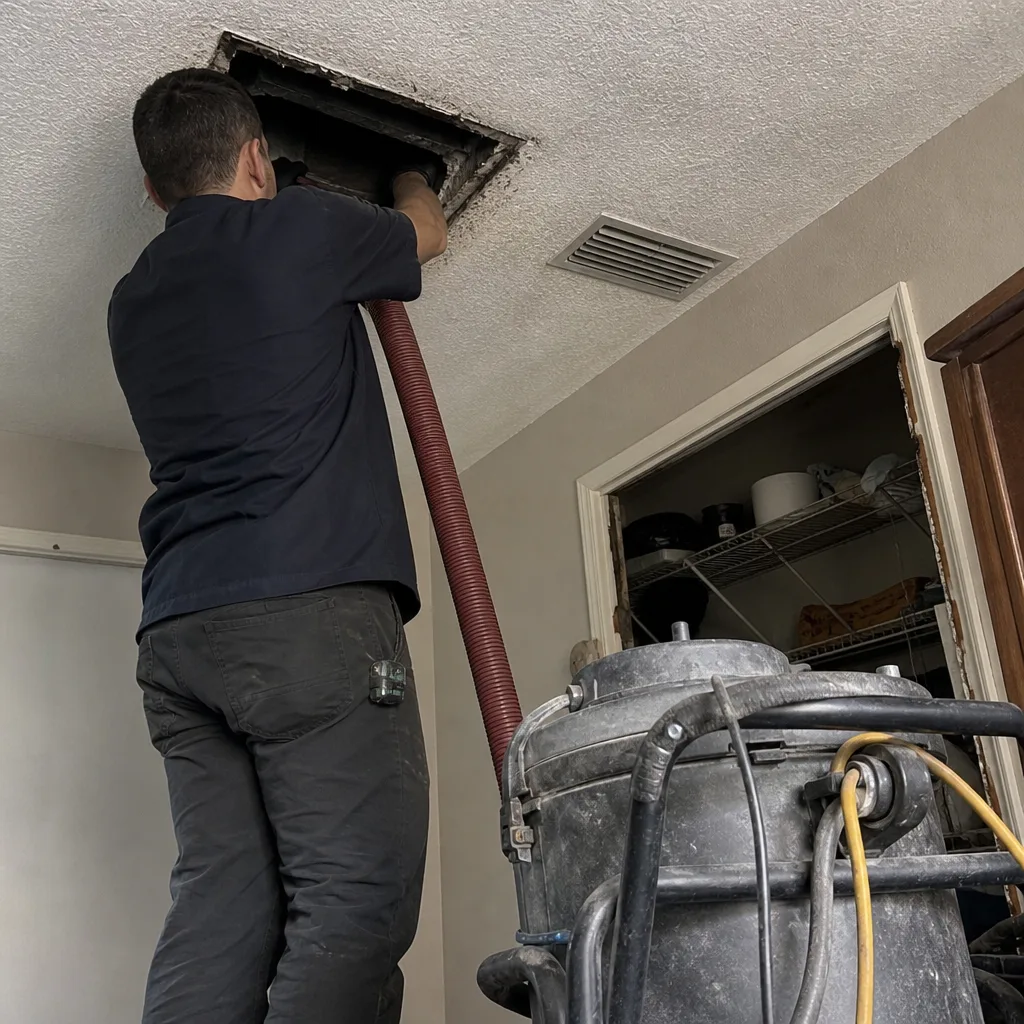
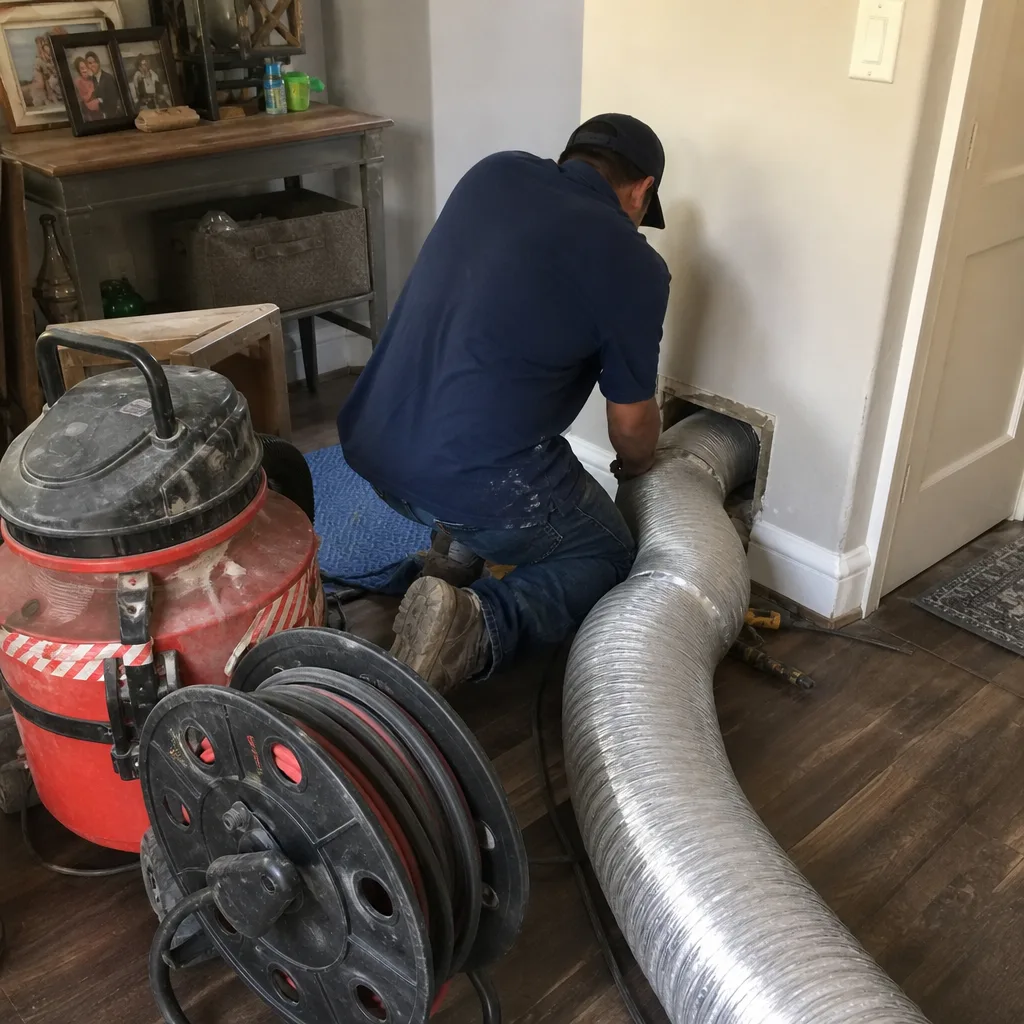
What should the cleaning itself look like? Professional-grade equipment, not a shop vac with a wand. A rotary brush system like the Rotobrush platform, high-powered vacuum collection from Nikro, and contaminant-control equipment from a brand like Abatement Technologies are the tools a serious contractor uses. If the crew shows up with consumer gear and no containment, that tells you something.
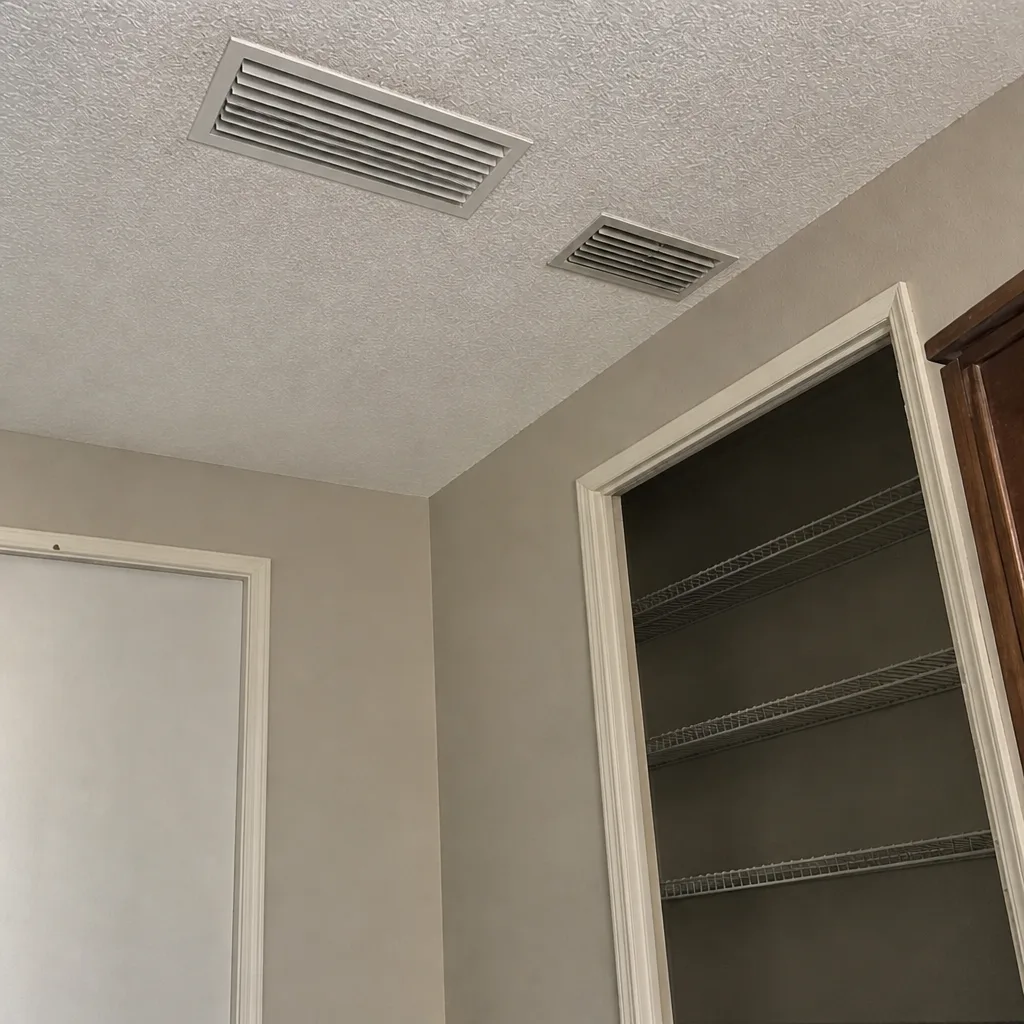
Ask how they’ll verify the work. Before-and-after photos of your own ducts are the honest answer. We take them because you shouldn’t have to take anyone’s word for it.
Common Mistakes to Avoid
- Cleaning before diagnosing. Two minutes of troubleshooting the coil, drain, and filter can save you a wasted cleaning. If the smell is condensation, cleaning won’t fix it and you’ve spent money for nothing.
- Trusting a coupon price as the final price. A low teaser number that swells once the technician is on site is the oldest trick in this trade. Ask for one flat price per system, agreed before any work starts.
- Ignoring disconnected attic duct because the cleaning quote looked fine. In Coral Springs, flex duct coming loose at the plenum or boot is a common failure. Cleaning around it doesn’t help; the duct has to be put back and sealed.
- Using the most restrictive filter available. A high-MERV filter on a system not built for it can starve airflow and cause its own set of problems. Match the filter to the equipment.
- Stepping on or stacking things on flex duct in the attic. Even a single box set on a run can crush it. If you store things in the attic, keep them off the ductwork.
- Assuming every musty smell is duct mold. It might be a dirty evaporator coil or a blocked drain line holding water. The wrong diagnosis means the wrong fix, and the symptom comes back.
- Letting a dryer vent go unaddressed while cleaning the ducts. Different job, same risk. A clogged dryer vent isn’t a duct-cleaning subset, but it’s worth checking while someone’s already looking at the house.
When to Call a Professional
You don’t need a professional for every suspicion. But you do when you’ve confirmed several signs and can’t rule out the causes yourself. Call if: your filter loads in weeks rather than months and it’s not explained by a dusty renovation; you can see sagging, kinked, or disconnected flex duct in the attic; one or more rooms never cool properly despite the system running; a musty smell gets worse with the fan running; or your bill has climbed for a season with no other explanation.
Harborview Air Duct Cleaning offers free estimates in Coral Springs. Our technicians have up to 10 years of experience, use professional-grade Rotobrush and Nikro equipment with Abatement Technologies containment, and can repair ductwork as well as clean it. Call (844) 761-5395. We answer 24/7. Fast dispatch from 7am to 7pm, Sunday through Friday.
Frequently Asked Questions
Not always, and that’s the important part. A smell that appears right at startup and fades within a minute often comes from a dirty evaporator coil or a blocked condensate drain line holding standing water, not from the ducts. A smell that’s strongest in one room or never fully goes away is more often duct-side, especially a disconnected or torn flex run. The difference changes the fix, so have the cause identified before anyone quotes a cleaning. Call (844) 761-5395 for an exact quote. Estimates are free.
Whole-system cleaning in Coral Springs typically runs in the range of a few hundred dollars per system, with the final price set by the written estimate after someone has looked at the house. What matters is that the price is flat per system, agreed before work starts, with no per-vent pricing. That structure protects you from a low coupon price that expands once the technician is on site. Call (844) 761-5395 for an exact quote. Estimates are free.
Before-and-after photos of your own ducts, not stock photos or a generic receipt. A crew that can show you what changed has done something you can verify. Combine that with professional-grade equipment on the day, and you’ve got a fair test: if the photos don’t show a real difference, ask why. Call (844) 761-5395 for an exact quote. Estimates are free.
For most Coral Springs homes, there’s no fixed calendar answer. A house that runs its AC nearly year-round, has pets, or recently finished a renovation will need attention sooner than a clean, low-dust household. Our honest recommendation is to let the signs decide, not the calendar: if the filter loads fast, one room won’t cool, or the attic duct is visibly compromised, get it looked at. Call (844) 761-5395 for an exact quote. Estimates are free.
Compromised ductwork can, especially leaking or disconnected attic duct dumping cooled air where it isn’t used, but it’s not the only cause. Rule out a rate increase, a hot stretch of weather, a thermostat change, a dirty filter, and an aging AC unit first. If the bill rose gradually over a season and rooms are uneven, ductwork is a real candidate worth inspecting. Call (844) 761-5395 for an exact quote. Estimates are free.
Yes. Repair and cleaning belong to the same job when ductwork is compromised, and it’s cheaper and better to fix a disconnected or crushed run than to clean around it. Harborview handles air duct cleaning, dryer vent cleaning, and duct repair, so the same visit can diagnose, fix, and clean. Homes across Coral Springs have folded duct issues worth checking. Call (844) 761-5395 for an exact quote. Estimates are free.
The Bottom Line
The duct warning signs worth trusting in Coral Springs are specific and quietly persistent: a smell that appears at startup, a room that won’t cool, a filter loading in weeks, or visible flex duct failure in the attic. Generic checklists miss these because they’re written for houses that don’t look like ours. Read the pattern, rule out the mimics, and hire someone who inspects before quoting. Professional-grade equipment, one flat price per system, and before-and-after photos are the marks of a crew worth calling.
Ready to have your system looked at? dryer vent cleaning and duct repair are part of the work we cover, and neighbors in Lauderhill get the same approach. Call Harborview Air Duct Cleaning at (844) 761-5395 for a free estimate in Coral Springs. We answer 24/7. Fast dispatch from 7am to 7pm, Sunday through Friday.
Written by the team at Harborview Air Duct Cleaning.